Global warehousing rarely follows one predictable pattern. A facility in Rotterdam may store cartons today, while a site in Nairobi handles spare parts tomorrow. Inventory changes, labor conditions vary, and floor space remains expensive. These pressures make storage design a practical business decision, not merely a purchasing exercise. Boltless Systems offer a flexible starting point for operators managing different buildings, product ranges, and growth schedules. Their components typically assemble without welded joints or extensive specialist equipment. That can simplify installation, adjustment, and relocation when warehouse needs shift.
Experienced warehouse planners still begin with load data, aisle widths, ceiling height, and handling equipment. A shelf that looks strong may perform poorly if beams, decking, or anchors are mismatched. Reliable suppliers should provide tested capacities, clear assembly instructions, and traceable material information. They should also explain how local climate, humidity, seismic exposure, and fire requirements affect the specification. In practice, teams often test one bay before expanding across a facility. This small trial can reveal awkward picking heights, unstable cartons, or wasted aisle space. It is less impressive than a rapid full rollout, but usually more informative.
For global operators, standardised Boltless Systems can support consistent training and maintenance across locations. Replacement parts may be easier to identify when configurations follow a common logic. Yet standardisation is not a universal answer. Local codes, building conditions, workforce habits, and product weights can differ sharply. A careful decision therefore balances modularity with site-specific engineering. The best system is not simply the cheapest or fastest option. It is the one that remains safe, usable, and adaptable after real operations begin. Some assumptions will be wrong. Good planning leaves room to correct them.
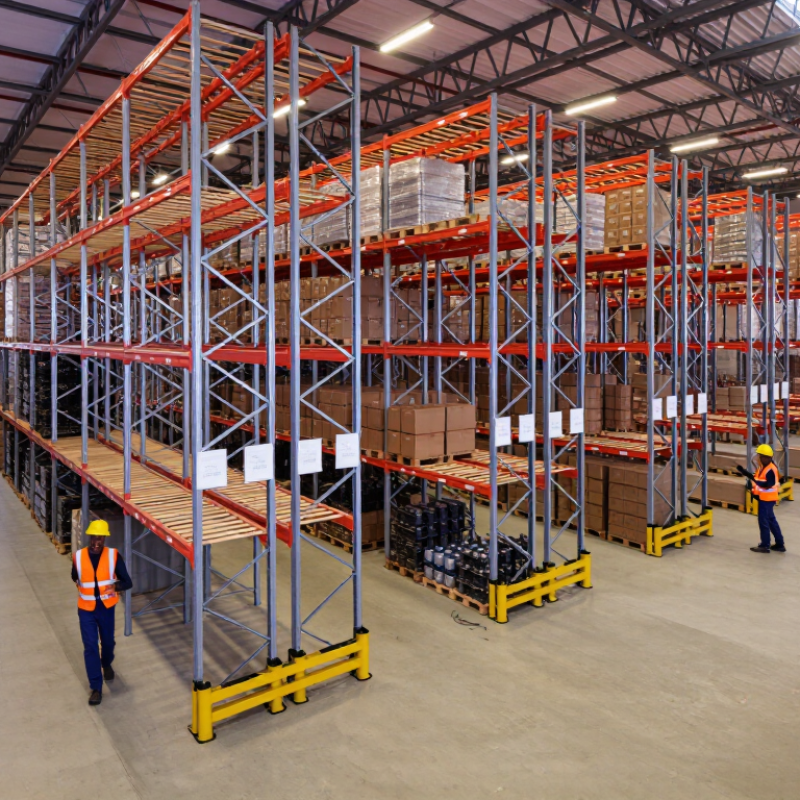
Boltless systems are modular storage structures assembled without welding or permanent fasteners. Uprights, shelves, and locking supports connect through slots, clips, or interlocking joints. This design allows warehouse teams to adjust shelf heights as inventory changes. A carton area may need 30 centimeters of clearance, while another requires nearly twice that space.
In global warehousing, flexibility matters because products, packaging, and operating conditions differ by region. Boltless systems can support spare parts, cartons, tools, and hand-loaded inventory. Their components are often easier to pack, transport, and install across multiple facilities. However, they are not automatically suitable for every load. Maximum capacity, floor strength, corrosion exposure, and local safety requirements must be checked. Small mistakes become expensive.
Tips: Confirm load ratings before installation. Keep heavier goods on lower levels. Use clear location labels in the local working language. Inspect connectors, beams, and feet regularly. Leave safe access around each unit.
In my experience, the best layout starts with real picking behavior, not a perfect drawing. Observe walking distances, replenishment delays, and awkward reaches. Then adjust the structure. A boltless frame may look simple, but uneven floors or rushed assembly can reduce stability. Warehouses operating across borders should also document inspection methods and train each site consistently. That step is sometimes overlooked, especially when expansion happens quickly.
| Evaluation Dimension | Boltless System | Bolted System | Global Warehousing Relevance |
|---|---|---|---|
| Connection Method | Interlocking beams, uprights, clips, pins, or rivet-style connections; no traditional nuts and bolts are required for standard assembly. | Frames and beams are secured primarily with bolts, nuts, and related hardware. | Fewer small fasteners can simplify assembly, relocation, and spare-parts planning across multiple sites. |
| Typical Assembly Requirement | Usually hand-assembled with basic tools; exact requirements depend on the structural design and safety instructions. | Typically requires tools for tightening and checking numerous fasteners. | Useful where warehouses must be commissioned or reconfigured quickly in different countries. |
| Shelf-Level Adjustment | Shelf heights can commonly be changed in fixed increments by repositioning beams or panels. | Adjustment is possible, but may require loosening and retightening more hardware. | Supports changing carton sizes, seasonal inventory, and different product mixes. |
| Common Load Range | Common light- to medium-duty configurations range from approximately 50 to 1,000+ kg per shelf, depending on span, materials, decking, and design. | Capacity also varies widely and may support light, medium, or heavy-duty storage when properly engineered. | Load ratings must be confirmed from tested specifications; they should not be inferred from appearance alone. |
| Space Utilization | Configurable widths, depths, and shelf levels can help use vertical and horizontal storage space efficiently. | Can also provide efficient storage, but changes may be less convenient depending on the frame design. | Adaptability is valuable in facilities with variable ceiling heights, aisle layouts, and storage policies. |
| Relocation and Reuse | Components can generally be dismantled and reused in another layout if they remain undamaged and compatible. | Reusable, but repeated removal and installation of threaded fasteners can increase handling time and wear. | Helps support warehouse moves, leased facilities, expansions, and network redesigns. |
| Maintenance Focus | Routine inspection should focus on upright damage, beam engagement, clips or pins, decking, stability, and visible deformation. | Inspection includes frame damage, beam connections, bolt tightness, corrosion, and decking condition. | A documented inspection process is important regardless of connection type, especially in high-throughput facilities. |
| Safety Requirements | Requires level floors, correct assembly, stated load limits, protection against impact, and anchoring or bracing where required by design. | Requires the same fundamental controls, plus correct installation and checking of bolted connections. | Local building, fire, seismic, occupational-safety, and storage-rack requirements must be assessed for each location. |
| Inventory Compatibility | Suitable for cartons, totes, bins, small parts, tools, archive boxes, and many manually handled products. | Suitable for comparable product categories, with configuration depending on load and access requirements. | Works well for mixed-SKU storage where shelf spacing must change over time. |
| Standardization Across Countries | Can be standardized by component dimensions, load ratings, assembly instructions, and metric or imperial labeling. | Can also be standardized, but fastener specifications and local installation practices must be controlled carefully. | A common specification improves training, purchasing, spare-parts control, and layout replication across regions. |
| Sustainability Consideration | Modular components can be repaired, reconfigured, and reused, potentially extending system service life. | Also reusable and recyclable when maintained and dismantled properly. | Lifecycle impact depends on material quantity, transport, durability, reuse rate, and end-of-life recycling. |
| Best-Fit Warehouse Scenario | Warehouses needing flexible, manually accessed, modular storage for changing inventory profiles. | Installations where a bolted structural approach is preferred because of existing specifications, design requirements, or operating practices. | The final choice should be based on load, seismic conditions, fire protection, automation, labor, local regulations, and total lifecycle cost. |
Note: Load capacities and component dimensions vary by design and manufacturer. Always use the approved engineering documentation, installation instructions, and applicable local regulations before placing a storage system into service.
Adjustable beams and shelves suit different carton sizes. A bay can hold small bins today and boxed goods next month. Small changes matter.
Trained workers can usually assemble and reposition components with basic hand tools. This may reduce delays during seasonal demand. Speed matters.
Teams should assess floor flatness, moisture, corrosion, seismic exposure, fire access, and local engineering rules. Conditions vary widely between regions. Never assume.
Clear load labels, bilingual signs, and consistent bay numbers support safer work across shifts. A marked aisle is easier to manage.
Warehouses can add bays, extend rows, and resize sections using repeatable layouts. Expansion still needs floor-load and aisle checks. Growth is not automatic.
Open frames make missing cartons, damaged levels, and poor stock rotation easier to see. Visibility improves routine checks. It can also expose messy habits.
Inspect loose parts, bent supports, uneven feet, and overloaded levels regularly. Keep capacity records and train staff. Tool-free does not mean risk-free.
Test one active aisle before expanding. Measure walking time, reach distance, trolley movement, and replenishment errors. A paper plan may still fail.
Review installation time, relocation, maintenance, training, downtime, and spare parts. The cheapest shelf is not always the cheapest system. Our calculations may be incomplete.
Boltless Systems are modular storage solutions designed for global warehouses that need flexibility, fast installation, and reliable organization without complex fastening procedures. Their adjustable shelves, tool-free assembly, and reconfigurable layouts allow facilities to store products of different sizes while adapting to changing inventory levels, international distribution demands, and varying warehouse configurations. This flexibility supports both short-term adjustments and long-term expansion, making storage areas easier to scale as business needs develop.
In addition to improving space utilization, Boltless Systems can help control operating costs by reducing installation time, maintenance requirements, and the need for specialized equipment. Their stable construction and organized layout can contribute to safer material handling and clearer work areas when properly planned and maintained. Many systems also support sustainability by using durable, reusable components that can be relocated or expanded instead of frequently replaced. When selecting a solution, global warehouses should consider load capacity, dimensions, environmental conditions, safety standards, installation requirements, future growth, and compatibility with local operational practices.

 Chaoyu Storage