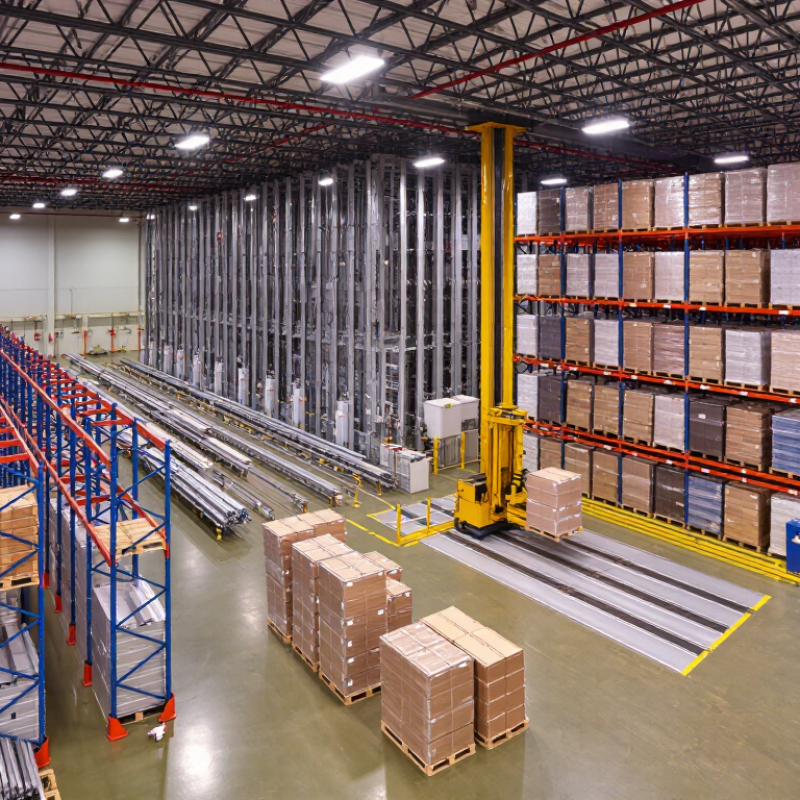
Choosing the best China Stacking Systems requires more than comparing prices or attractive catalog images. A suitable system must match product weight, pallet size, storage height, warehouse temperature, and handling equipment. In a real facility, a few centimeters can affect forklift movement. A poorly planned aisle may slow every shift. A strong design should also consider load distribution, floor capacity, rack stability, fire protection, and maintenance access.
China offers many stacking solutions, including selective pallet racking, drive-in racks, cantilever racks, mobile systems, and automated storage equipment. Each option serves a different operating pattern. Selective racks provide quick access to individual pallets. Drive-in designs improve density but reduce selectivity. Automated systems can save labor space, yet they demand stronger technical support and clearer data management. The best suppliers usually provide drawings, load calculations, installation guidance, inspection records, and replacement parts. Ask for proof, not promises.
Details matter.
This guide will compare system structure, manufacturing quality, safety features, customization, delivery support, and long-term operating costs. It will also examine practical factors that are easy to overlook, such as uneven floors, changing inventory, forklift turning radius, and local service response. Product claims may sound precise, but field performance can vary. Some comparisons remain approximate without site measurements and independent inspections. That limitation deserves attention. A reliable decision comes from matching engineering evidence with daily warehouse experience, not choosing the cheapest quotation or the most advanced-looking machine.
China stacking systems are storage tools designed to organize plates, bowls, and serving pieces safely. They usually use adjustable racks, vertical dividers, or padded supports. Each item has a defined position. This reduces pressure on delicate rims and helps prevent scratches.
The system works by distributing weight across stable contact points. Plates stand vertically or stack in short groups, depending on their shape and thickness. Non-slip surfaces help limit movement when cabinet doors open.
Adjustable widths are useful because dinnerware sizes rarely match perfectly. Measure cabinet depth, shelf height, and the largest plate before choosing a system.
A practical test is simple: place one plate inside and check whether your fingers can remove it comfortably. Many systems look efficient but waste space around handles or irregular bowls. That detail is easy to miss.
Tips: Use soft liners between fragile pieces. Keep heavier serving dishes on lower shelves. Leave a small gap for airflow and easier handling. Check the supports every few months for slipping or wear. Avoid forcing oversized plates into narrow sections. It can damage both the dishes and the rack.
A sturdy system matters, but daily access matters more. Some households may still need a mixed setup because one design rarely fits every piece.
China-made stacking systems cover several warehouse needs, so the best choice depends on storage density, product weight, and access frequency. Selective pallet racking offers direct access to every pallet and suits mixed inventory. Drive-in racking increases density by reducing aisles, but it works better for stable, uniform goods. Push-back systems provide deeper storage while keeping loading and picking relatively flexible. Cantilever racks support long items such as pipes, timber, and metal profiles. Carton flow racks help workers handle small cartons with clearer stock rotation. Automated storage systems add speed and accuracy, although they require stronger planning and maintenance support.
A reliable evaluation should examine steel thickness, weld quality, beam capacity, surface coating, and installation tolerance. Request load calculations, inspection records, and performance testing before purchase. Local engineering support also matters. A low price may hide weaker components or difficult replacement work. That risk deserves attention. I would also compare the system with actual forklift turning space, not only the warehouse drawing. Some layouts look efficient on paper but feel cramped during daily operation. Safety barriers, rack protectors, and clear load labels should be included from the beginning.
Tips: Measure your real pallet dimensions first. Leave room for damaged cartons and future stock changes. Ask for a small sample installation when possible. Check bolts, anchors, and protective finishes closely. Review the design with warehouse operators, because their practical feedback may reveal problems that technical plans miss.
China stacking systems depend on coordinated components, not a single machine. Heavy-duty pallet racks provide the storage frame, while stacker cranes or robotic shuttles move loads through narrow aisles. Conveyors transfer pallets between receiving, storage, and dispatch zones. Each interface needs accurate positioning. A 5-millimeter alignment error can become a serious jam.
A warehouse management system assigns locations and records every pallet. Warehouse control software then translates these tasks into commands for cranes, lifts, scanners, and conveyors. Barcode or radio-frequency identification devices verify pallet identity at key points. According to IFR’s World Robotics 2024 report, China installed 276,288 industrial robots in 2023, representing more than half of global installations. This figure shows strong automation capacity, but it does not guarantee a reliable stacking operation.
Safety components deserve equal attention. Use mechanical stops, light curtains, emergency switches, load sensors, and protected pedestrian routes. Rack inspections should check upright damage, loose anchors, and uneven floors. The China Federation of Logistics and Purchasing reported that social logistics costs equaled 14.4% of GDP in 2023. Better stacking density can reduce handling waste, yet higher density may slow emergency access and maintenance. That trade-off is easy to underestimate. Real commissioning experience also reveals a weakness: software simulations often assume clean pallets, stable labels, and perfect operators. Actual sites rarely behave so neatly.
Selecting a stacking system starts with the pallet footprint. The chart compares reference pallet formats commonly used for warehouse design in China and shows the corresponding floor area. Conveyors, stacker cranes, robotic grippers, sensors, and control software should all be sized around the selected pallet dimensions.
Reference dimensions are based on commonly specified pallet formats in GB/T 2934. Actual equipment selection should be verified against the current project standard, load, and safety requirements.
Choosing the right china stacking system starts with the dishes, not the rack. Measure the plate diameter, rim height, and total stack weight. A system made for flat dinner plates may not hold bowls securely. Leave a small clearance between stacks. Tight storage often causes chipped edges during busy service.
In a working kitchen, I would compare fixed racks, adjustable dividers, and mobile carts. Fixed racks suit a stable storage area. Adjustable dividers work better when tableware changes often. Mobile carts can reduce carrying distance, especially between washing and dining areas. Check wheel locks, frame strength, and the stated load rating. Do not rely on appearance alone.
Cleaning access matters too. Choose smooth surfaces with few narrow gaps. Moisture trapped under a stack can create unpleasant odors and hygiene concerns. Before purchasing, mark the proposed footprint with tape and test the walking space around it. This simple step is easy to skip. I have also seen teams choose maximum capacity, then struggle to remove the lowest plate safely. A slightly smaller system may support faster service and fewer damaged dishes. Review the layout after a week, because real workflow can expose mistakes that measurements miss.
| China Stacking System | Typical Capacity | Recommended China Type | Space Efficiency | Protection Level | Access Speed | Best Use | Key Selection Considerations |
|---|---|---|---|---|---|---|---|
| Open Plate Rack | Approximately 20–60 plates per section, depending on plate diameter and rack spacing | Standard dinner plates, side plates, and service plates | High | ★★★☆☆ | Very fast | Busy kitchens, cafeterias, and serving lines | Choose adjustable dividers, a stable base, and spacing that prevents plate edges from touching. |
| Vertical Plate Divider Rack | Approximately 12–36 plates per rack, based on the number of individual slots | Large plates, specialty plates, and delicate ceramic pieces | High | ★★★★☆ | Fast | Organized storage where individual separation is important | Check slot width, divider padding, rack stability, and compatibility with the plate diameter. |
| Adjustable Peg Rack | Approximately 24–72 plates, depending on rack length and peg configuration | Mixed plate sizes, bowls, platters, and irregular shapes | Very high | ★★★★☆ | Fast | Professional kitchens with changing tableware inventories | Use coated or cushioned pegs and leave enough clearance to avoid chipping or scratching. |
| Enclosed China Storage Cabinet | Approximately 40–150 pieces, depending on shelf count and cabinet dimensions | Fine china, banquet serviceware, and low-use tableware | Medium | ★★★★★ | Moderate | Dust-sensitive, valuable, or infrequently used china | Look for adjustable shelves, smooth interiors, ventilation, secure doors, and adequate load capacity. |
| Mobile China Rack | Approximately 60–180 pieces, depending on shelf size and trolley height | Plates, bowls, trays, and mixed banquet tableware | High | ★★★★☆ | Very fast | Hotels, catering operations, and event venues | Prioritize locking casters, corner protection, ergonomic handles, and a frame that resists movement when loaded. |
| Drawer-Based China Organizer | Approximately 20–80 pieces per drawer, depending on compartment layout | Small plates, saucers, cups, and delicate serving pieces | Medium | ★★★★★ | Fast | Front-of-house storage and premium dining areas | Choose full-extension drawers, non-slip liners, reinforced runners, and compartments sized to the china. |
| Stacking Plate Dispenser | Usually approximately 30–80 plates per dispenser column | Uniform plates used frequently in self-service operations | Very high | ★★★☆☆ | Very fast | Buffets, institutional dining, and high-volume meal service | Confirm plate diameter, rim profile, dispenser adjustment range, and refill safety before purchase. |
| Modular Shelf-and-Divider System | Approximately 50–250 pieces per shelving bay, depending on configuration | Mixed collections of plates, bowls, cups, and serving ware | Very high | ★★★★☆ | Moderate | Large kitchens and storage rooms requiring reconfiguration | Evaluate modular expansion, shelf load ratings, divider adjustability, aisle clearance, and cleaning access. |
| Under-Counter China Rack | Approximately 20–60 pieces, depending on cabinet width and shelf height | Frequently used plates, bowls, and cups near a preparation station | High | ★★★☆☆ | Very fast | Compact kitchens and service counters | Measure the available opening, check moisture resistance, and allow sufficient clearance for hand access. |
| Protective Transport Crate System | Approximately 24–120 pieces per crate, depending on internal compartments | Banquet china, rental tableware, and china moved between locations | Medium | ★★★★★ | Moderate | Transportation, off-site catering, and long-term storage | Select washable cushioning, ventilated construction, secure closures, ergonomic handles, and stackable dimensions. |
China stacking systems should be judged by safety evidence, not storage height alone. A suitable design considers load weight, pallet dimensions, aisle clearance, seismic exposure, forklift routes, and fire access.
The International Labour Organization estimated 2.93 million work-related deaths and 395 million non-fatal injuries worldwide in 2019. Those figures show why small design shortcuts deserve serious attention.
Quality begins with traceable steel, verified welding, corrosion protection, and documented load testing. Suppliers should provide material certificates, design calculations, installation records, and inspection schedules.
ISO 12100 supports risk-based machinery design, while EN 15635 recommends regular rack inspections and immediate control of damaged components. China-based projects should also meet applicable GB standards, construction requirements, and local fire codes. Compliance is not just paperwork.
A practical inspection should check bent uprights, missing safety pins, loose anchors, overloaded beams, and uneven floors. Operators need visible load signs and training for changing pallet loads.
The U.S. Bureau of Labor Statistics recorded 885 workplace deaths involving falls, slips, and trips in 2022. That category does not describe every warehouse risk, but it highlights the danger of poor access and housekeeping.
Automated stacking systems add sensors and software, yet they can also create new failure points. I would not accept a “maintenance-free” claim without service records, alarm testing, and an emergency isolation procedure. Perfect compliance is difficult. Documented correction is essential.
Measure plate diameter, rim height, and total stack weight. Leave slight clearance between stacks. Measure twice.
No. Flat plates and bowls need different support. A rack designed for plates may hold bowls poorly.
Fixed racks suit stable storage areas. Adjustable dividers help when tableware changes often. Mobile carts shorten the route between washing and dining areas.
Check wheel locks, frame strength, and the stated load rating. Appearance alone proves little. Looks can mislead.
Avoid tightly packed stacks and leave small clearances. Select a system that allows safe removal of lower plates. More capacity is not always better.
Mark the proposed footprint with floor tape. Walk around it with staff and loaded carts. Review the layout after one week.
Choose smooth surfaces with few narrow gaps. Moisture trapped beneath dishes can cause odors and hygiene concerns. Small gaps matter.
Request material certificates, welding records, load calculations, testing documents, installation records, and inspection schedules. Do not accept unsupported capacity claims.
Look for bent supports, missing safety pins, loose anchors, overloaded beams, and uneven floors. Keep load signs visible. Document every correction.
Not automatically. Sensors and software add useful controls, but they also create new failure points. Require alarm tests, service records, and emergency isolation procedures. A perfect plan may still need revision.
China Stacking Systems are organized storage and handling solutions designed to use vertical space efficiently while keeping goods accessible and stable. They may include pallet stacking frames, mobile racks, automated storage units, shelving structures, and modular systems suited to warehouses, workshops, and distribution facilities. Their operation typically combines structural supports, load-bearing surfaces, guide rails, safety locks, lifting equipment, and, where required, electronic controls to improve storage density and workflow efficiency.
Choosing the right system depends on the type, size, weight, turnover rate, and handling requirements of the stored goods, as well as available floor space and future expansion plans. Buyers should evaluate material quality, load capacity, installation requirements, maintenance needs, and compatibility with existing equipment. Safety and compliance are equally important: reliable systems should include clear operating procedures, secure connections, protective barriers, inspection routines, and accurate load ratings. A well-selected solution balances performance, durability, flexibility, and workplace safety.

Chaoyu Storage