China’s steel manufacturing strength makes it a major sourcing base for Steel Containers. The World Steel Association reported China produced about 1.02 billion tonnes of crude steel in 2023. This scale supports competitive pricing, broad material access, and mature fabrication networks.
However, production volume does not guarantee dependable container quality. Buyers should examine steel grades, welding procedures, coating systems, load ratings, and inspection records. ISO 668 provides internationally recognized dimensional requirements for freight containers. ISO 1496 also defines essential testing and performance expectations for freight container structures. These standards help buyers compare suppliers beyond attractive catalogue photographs.
Quality is visible. Details matter.
This guide reviews leading Chinese manufacturers and suppliers across industrial, storage, transport, and customized applications. It considers factory experience, certifications, export capability, engineering support, and after-sales communication. Industry reports often present different market estimates, because product categories and regional definitions vary. That limitation deserves attention when comparing supplier claims.
Experienced buyers may request material certificates, weld inspection results, coating specifications, and sample photographs from completed projects. They should also confirm production capacity rather than relying only on annual sales figures. A factory can appear impressive online yet struggle with small-batch customization or consistent delivery. That is a practical risk.
The strongest suppliers combine efficient manufacturing with traceable quality control. They understand container geometry, corrosion exposure, handling stresses, and destination requirements. This overview aims to help importers, distributors, and industrial users build a more reliable shortlist. Careful verification remains essential, especially when specifications change during negotiation.
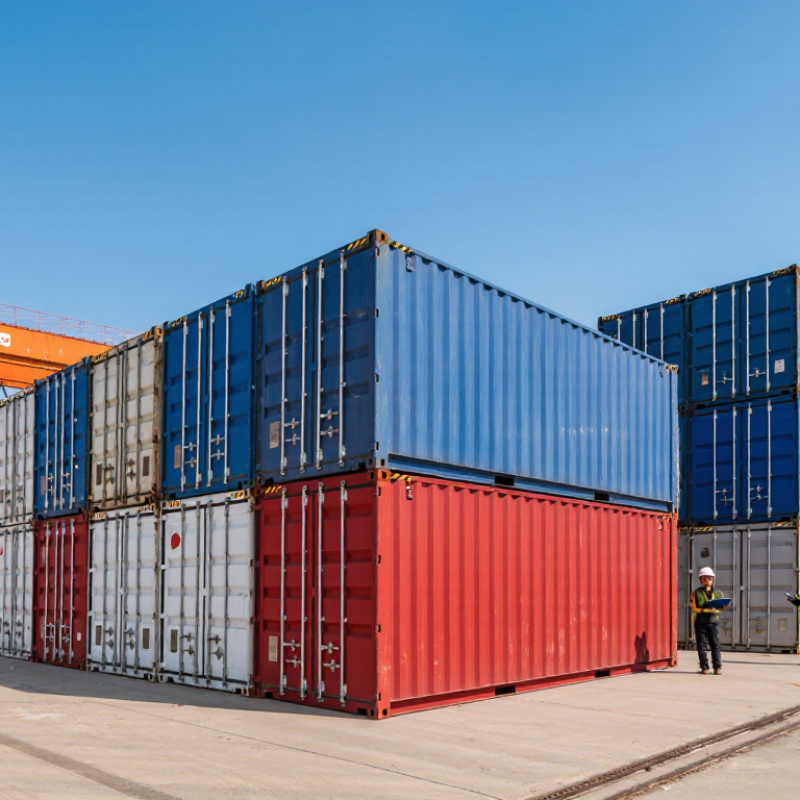
China Top Steel Containers Manufacturers and Suppliers?
What Are Steel Containers and Where Are They Used?
Steel containers are strong storage units made from carbon steel, stainless steel, or coated metal. They may appear as drums, bins, tanks, cages, or large transport boxes. Their rigid walls resist impact, stacking pressure, heat, and repeated handling. Some models include sealed lids, removable covers, lifting points, or reinforced corners.
Factories use them for components, powders, liquids, tools, and recyclable materials. Warehouses often choose steel bins for parts storage because forklifts can move them safely. Construction sites use them for equipment and sorted materials. In food processing, stainless steel containers support clean handling when their surfaces and coatings meet suitable hygiene requirements. Transport applications need secure doors, stable bases, and protection against moisture.
Material selection needs careful attention. A thin wall may reduce cost but deform under heavy loads. An unsuitable coating may peel, stain products, or fail in humid environments. In practical inspections, weld quality, drainage, load ratings, and lid fit deserve close attention. Small defects matter.
Reliable manufacturers and suppliers should provide drawings, material details, dimensional checks, and traceable quality records. They should also explain testing methods instead of offering vague strength claims. Buyers should confirm the container’s capacity, operating temperature, stacking conditions, and cleaning requirements. Steel containers are durable, but they are not maintenance-free. Scratches, standing water, and overloaded bases can shorten their service life. Good design helps, but daily handling still decides much.
How to Evaluate China’s Steel Container Manufacturers
China’s steel container industry benefits from a deep raw-material base. The World Steel Association reported 1.892 billion tonnes of global crude steel production in 2023. This scale helps, but it does not prove consistent container quality. Buyers should verify the steel grade, mill certificates, weld procedures, and coating thickness for every production batch.
A reliable evaluation begins with measurable evidence. Request dimensional inspection records against ISO 668 and structural testing aligned with ISO 1496-1. Check corner fittings, door seals, floor strength, and lifting points. Ask for non-destructive weld testing, salt-spray results, and photographs showing production details. The International Organization for Standardization’s ISO Survey 2023 recorded more than one million ISO 9001 certificates worldwide, yet certification alone cannot replace a factory audit. It is only one signal.
Visit the plant when possible. Watch workers measure steel sheets, prepare weld joints, and protect finished surfaces. Review equipment maintenance logs and defect records, not only showroom samples. A perfect sample proves little. I would also compare rejected-unit rates, traceability systems, packaging methods, and replacement policies. Some suppliers offer low prices by reducing coating thickness or inspection time. That saving may become rust, leakage, or deformation during handling. Product specifications should state tolerances clearly, with independent pre-shipment inspection written into the purchase contract. Be cautious. A confident sales presentation is not technical evidence.
| Evaluation Dimension | Practical Benchmark | Documents or Evidence to Request | Suggested Weight | Evaluation Score |
|---|---|---|---|---|
| Product Standard Compliance | For intermodal freight containers, designs should reference ISO 668, ISO 1161 and ISO 1496-1 where applicable. | Technical drawings, design calculations, type-test reports and applicable container approval documents. | 15% | __/15 |
| Steel Material Traceability | Material grades such as Q235B or Q355B may be used for structural components when specified by the design; equivalent grades must be confirmed through mill certificates. | Heat numbers, mill test certificates, chemical composition, yield strength and tensile-strength records. | 10% | __/10 |
| Welding Capability | Welding procedures should be qualified for the selected steel grades, joint types and production thicknesses. | Welding procedure specifications, procedure qualification records, welder qualifications and inspection procedures. | 12% | __/12 |
| Weld Inspection and Defect Control | Critical load-bearing welds should be inspected using appropriate visual, dimensional and, when required, non-destructive testing methods. | Inspection plans, visual inspection records, ultrasonic or magnetic-particle reports and corrective-action records. | 8% | __/8 |
| Dimensional Accuracy | The finished unit should be checked against approved drawings and applicable ISO dimensional requirements, including corner fitting and door alignment. | Final inspection reports, calibrated measuring-tool records and dimensional inspection photographs. | 8% | __/8 |
| Load and Functional Testing | Testing should reflect the intended container type, payload, stacking condition, lifting points, doors, roof and floor performance. | Test plan, test-load data, deformation measurements, leakage inspection and signed test reports. | 12% | __/12 |
| Surface Preparation | A documented preparation process should remove oil, rust, mill scale and contaminants before coating; abrasive blasting is commonly used for heavy-duty steel protection. | Surface-preparation standard, cleanliness profile readings, ambient-condition records and inspection checklists. | 6% | __/6 |
| Coating System and Corrosion Protection | The coating system should be selected according to humidity, salt exposure, chemicals, service life and repair requirements; dry-film thickness must be specified. | Paint data sheets, coating-system specification, dry-film thickness records and adhesion or holiday-test results where required. | 8% | __/8 |
| Floor and Interior Construction | Floor material, load distribution, fasteners, drainage and interior finish should match the cargo type and required payload. | Floor material certificates, floor-load test data, fastening details and moisture or leakage inspection records. | 7% | __/7 |
| Quality Management System | A certified quality-management system based on ISO 9001 provides a structured framework for purchasing, production, inspection, nonconformance control and continual improvement. | Current certificate, certification scope, issuing-body information, audit records and quality manual extracts. | 6% | __/6 |
| Production Capacity and Lead Time | The supplier should demonstrate capacity for the required monthly quantity and provide a written schedule covering engineering, material procurement, fabrication, inspection and shipment. | Production plan, capacity statement, recent anonymized shipment records and agreed milestone schedule. | 5% | __/5 |
| Customization and Engineering Support | The manufacturer should be able to adapt dimensions, doors, ventilation, lifting features, insulation, shelves or special internal fittings without compromising structural safety. | Approved drawings, revision-control process, engineering calculations, prototype records and sample approval procedure. | 5% | __/5 |
| Export Packaging and Shipping Readiness | Packaging and loading procedures should prevent coating damage, deformation, moisture accumulation and loss of loose components during international transport. | Packing specification, loading photographs, shipping marks, container-loading plan and export documentation sample. | 3% | __/3 |
| After-Sales Service and Warranty | Warranty terms should define structural defects, coating failure, excluded damage, claim procedures, response times and replacement-part availability. | Signed warranty policy, spare-parts list, complaint-handling process and service-response commitments. | 3% | __/3 |
| Total Supplier Evaluation | 100% | __/100 | ||
China’s steel container supply base is concentrated around major steel, port, and fabrication clusters. The Yangtze River Delta, including Jiangsu, Zhejiang, and Shanghai, supports export containers, industrial bins, drums, and customized storage units. Guangdong and nearby coastal provinces serve chemical, food, and logistics users through strong port networks. Tianjin, Shandong, and Liaoning also remain important for heavy industrial fabrication and bulk equipment.
China produced about 1,005 million tonnes of crude steel in 2024, representing roughly 53% of global output, according to World Steel Association data. This scale supports competitive sourcing, but steel availability alone does not prove supplier quality. Public trade datasets rarely separate steel containers from broader metal packaging categories. That is a weakness worth remembering.
Supplier categories vary by application. Standard freight-container factories usually emphasize welded frames, corrosion protection, and certification control. Industrial packaging suppliers focus on steel drums, bins, and reusable pallets. Tank-container manufacturers require stronger engineering systems, pressure testing, and documented traceability. Smaller workshops may offer flexible dimensions and faster samples, yet their inspection records can be uneven. Buyers should review material certificates, weld procedures, coating thickness, load tests, and factory audit reports. China’s manufacturing depth is real. Verification still matters more than a low quotation.
China’s steel container manufacturers serve a global shipping market. UNCTAD’s Review of Maritime Transport 2024 states that over 80% of world merchandise trade moves by sea. Therefore, suppliers must control both structural strength and production consistency. ISO 668 defines container dimensions and ratings. ISO 1496-1 covers testing for general-purpose freight containers. ISO 1161 specifies corner fittings. These standards affect stacking, lifting, and compatibility at ports.
Most reliable factories use weather-resistant steel for side panels, rails, and corner posts. Marine plywood or bamboo-based flooring is common, but its moisture resistance needs verification. The World Steel Association reported 1.892 billion tonnes of crude steel production in 2023. This capacity supports competitive sourcing, but raw volume does not guarantee quality. Look for controlled laser cutting, robotic or qualified manual welding, shot blasting, coating thickness checks, and dimensional inspection. Water testing matters too. A certificate is not proof of every weld.
Tips: Ask suppliers for mill certificates, weld inspection records, coating data, and test reports tied to the exact production batch. Check whether the factory can build standard and customized units without changing material grades. Photograph corner castings and floor joints during inspection. Small details reveal process discipline. Yet paperwork can mislead. An independent pre-shipment inspection remains worthwhile, especially for large orders. Supplier selection should balance price, traceability, tooling, repair support, and realistic monthly output.
A comparison of widely used ISO container formats. Actual capacity may vary slightly by door design, floor construction, insulation, and manufacturer specifications.
Reference basis: ISO container dimensions and commonly published nominal specifications for standard dry freight containers. Values are approximate and are not company-specific performance claims.
Selecting a Chinese steel container supplier requires more than comparing unit prices. China produced about 1,005 million tonnes of crude steel in 2024, representing roughly 53% of global output, according to World Steel Association data. That scale supports competitive sourcing, but quality still varies between factories. Ask for material certificates, welding procedures, dimensional records, and recent inspection reports. Verify compliance with ISO 668, ISO 1161, and ISO 1496 where applicable.
Request a complete quotation, including steel grade, coating system, thickness, door hardware, testing, packaging, and delivery terms. A practical buyer should also inspect weld seams, corner castings, drainage holes, and coating adhesion through an independent agency. The International Maritime Organization’s container safety framework makes structural integrity and certification essential for transport use. Do not accept “ISO compliant” as proof without documents and traceable test results.
Check factory capacity against your order size. A supplier producing many units may still outsource critical welding or painting. That is easy to miss. Review at least three recent projects, inspect one finished sample, and define acceptance limits before production. The cheapest offer can become expensive after repairs, delays, or rejected goods. I would also keep a small payment balance until final inspection, although this may reduce negotiation flexibility. UNCTAD’s Review of Maritime Transport 2024 highlights continuing pressure on shipping schedules, so confirm production lead times and port arrangements in writing.
The Yangtze River Delta supports export containers, drums, industrial bins, and storage units. Guangdong serves chemical, food, and logistics users. Tianjin, Shandong, and Liaoning focus on heavy industrial fabrication. Port access can simplify delivery. It does not guarantee quality.
Freight-container factories usually build welded frames and standard units. Industrial packaging suppliers make drums, bins, and reusable pallets. Tank-container manufacturers need advanced engineering and pressure testing. Smaller workshops may offer flexible sizes and quick samples. Their inspection records can be uneven.
ISO 668 covers container dimensions and ratings. ISO 1496-1 covers general-purpose container testing. ISO 1161 covers corner fittings. These requirements affect stacking, lifting, and port compatibility. Ask for traceable evidence, not vague claims.
Weather-resistant steel is common for panels, rails, and corner posts. Floors may use marine plywood or bamboo-based materials. Check moisture resistance carefully. Confirm the steel grade and thickness. A shiny surface proves very little.
Review weld seams, corner castings, floor joints, drainage holes, and coating adhesion. Request dimensional records and coating thickness data. Observe laser cutting, welding, blasting, and painting controls. Water testing can reveal leaks. One certificate cannot prove every weld.
Request mill certificates, welding procedures, inspection records, coating data, and batch-linked test reports. Factory audit reports can support the review. Match documents to the actual production batch. Paperwork can mislead. Independent inspection remains worthwhile.
Request steel grade, thickness, coating system, hardware, testing, packaging, and delivery terms. Compare complete costs, not only the unit price. Include repair risks and possible delays. The cheapest offer may become expensive. I would still question unusually low prices.
Compare monthly output with your order size. Check whether critical welding or painting is outsourced. Review three recent projects and inspect one finished sample. Confirm lead times and port arrangements in writing. Schedules can change quickly.
Custom dimensions are possible, especially with smaller workshops. Confirm material grades remain unchanged during customization. Define load limits, door details, floor materials, and acceptance limits. Flexible sizing is useful. It can also complicate inspection.
Use written acceptance criteria before production begins. Keep a small payment balance until final inspection, if negotiations allow. Check the finished unit before shipment. This may reduce bargaining flexibility. Still, it can limit costly disputes.
Steel Containers are durable, reusable units made primarily from carbon steel or stainless steel, designed to support the storage, handling, and transportation of goods in industrial, commercial, and construction settings. They may be used for bulk materials, equipment, tools, liquids, and general cargo, depending on their structure and safety features. When evaluating Chinese manufacturers, buyers should consider production experience, factory capacity, quality-control procedures, customization services, certifications, and communication efficiency.
China’s major manufacturing regions offer different supplier strengths, including large-scale production, metal fabrication, logistics support, and specialized container solutions. Important factors include steel grade, corrosion protection, welding quality, dimensional accuracy, load capacity, surface treatment, and compliance with relevant international standards. Before purchasing, buyers should clearly define specifications, request drawings and samples, verify inspection procedures, compare quotations, confirm packaging and delivery terms, and establish reliable after-sales communication. A careful supplier assessment helps ensure consistent quality, competitive pricing, safe transportation, and long-term cooperation.
Chaoyu Storage