Impact Racks protect pallet loads where forklifts, pallet jacks, and tight turning spaces meet. Their role is easy to underestimate. A steel guard may look simple, yet its height, anchoring, and placement can determine whether a small collision becomes costly rack damage. Buyers comparing manufacturers should look beyond product photos and price lists. They need clear load data, compatible layouts, installation guidance, replacement parts, and evidence of quality control.
A useful buyer’s principle is: “Choose impact protection for the traffic and loads in your actual aisles, not for an idealized warehouse.” This is original editorial wording, not a verified quotation from a named expert. A named expert quote should be added only after its source and wording are confirmed. That distinction matters. Reliable purchasing advice should be traceable.
This guide examines China’s top 10 Impact Racks manufacturers for global buyers. It considers product range, customization, material and finish options, communication, export experience, and after-sales support. A buyer should also ask how guards fit around upright frames, floor anchors, and existing rack bays. Small details matter. A poorly matched protector can obstruct pallet access or leave vulnerable steel exposed. No ranking can replace site measurements or engineering review. Use the comparison as a starting point, then verify specifications, certifications, lead times, and warranty terms directly with each supplier.
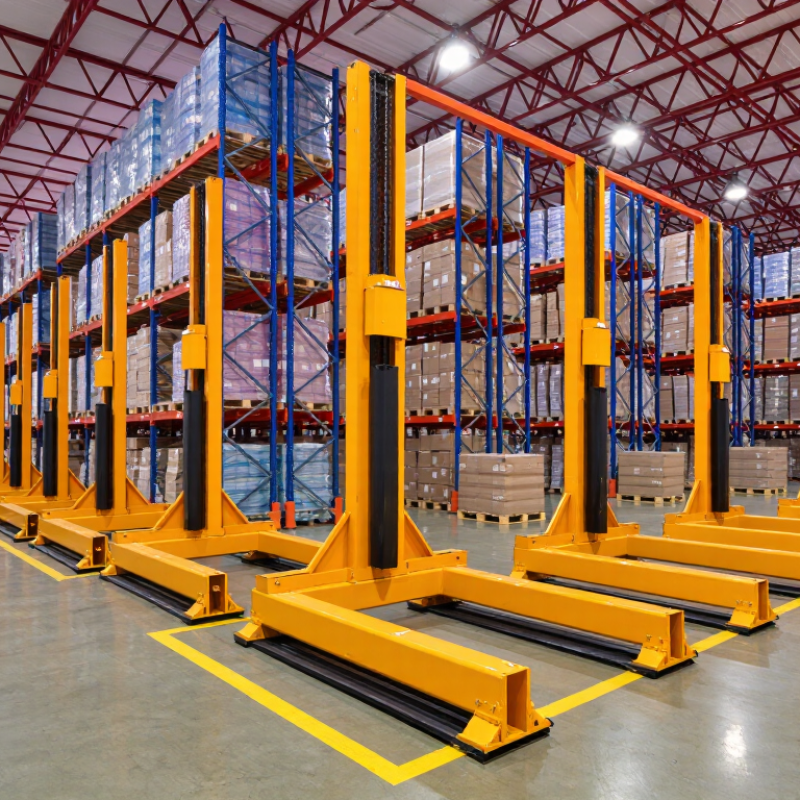
Impact racks help reduce damage when forklifts or pallet trucks strike storage frames. The most exposed points are often aisle ends, upright bases, and corners near busy turning areas. A bent upright can affect how loads are supported, while a loose anchor or shifted pallet may create further hazards. Small dents matter. Any visible damage should be assessed by a qualified person; a guard does not restore a weakened rack.
Common protections include upright guards fitted around individual frame legs, end-of-aisle barriers spanning exposed rack rows, and steel bollards placed near vulnerable corners. Column guards protect building supports, while mesh panels can help contain items at the back of a rack. Each type serves a different purpose. Choose protection around actual vehicle paths, rack layout, and handling practices—not appearance alone. A walk-through during normal shifts can reveal scrape marks and tight turns that a floor plan misses. It is easy to protect one corner and overlook another. Guards can also obstruct access or create new collision points if placed poorly, so clearances and regular inspections deserve equal attention.
For global buyers evaluating China’s impact-rack manufacturers, safety evidence matters as much as price. ANSI MH16.1 provides engineering guidance for industrial steel storage racks, including structural design and testing. Ask for calculations based on your actual rack layout and operating conditions. A capacity shown in a catalog may not fit your warehouse.
For U.S. workplaces, OSHA 1910.176(b) requires stored materials to remain stable and secure against sliding or collapse. It’s a workplace storage rule, not a rack-design manual or product approval. Keep pallet loads within posted limits, maintain clear aisles, and prevent cartons from overhanging. Small details matter.
Before installation, confirm that the floor, anchors, beam locks, and forklift clearances match the approved layout. Place readable load signs where operators can see them. Inspect uprights and bracing regularly, especially after a forklift strike. Isolate damaged bays and seek a qualified assessment before reuse. Drawings can miss rushed site changes; field conditions drift, and inspections need to catch that.
For global buyers comparing impact rack manufacturers, three specifications deserve close attention: load rating, steel thickness, and anchoring. A rack’s stated capacity should identify whether it applies per beam level or per bay. Check whether the figure assumes evenly distributed loads; concentrated loads can create different stresses. Include pallet weight and handling conditions in the calculation. A forklift bump is not a design method.
Steel gauge can be misleading because gauge numbers do not directly communicate strength. Ask for actual material thickness, structural drawings, and load documentation. Beam connections, upright geometry, weld quality, and protective coatings also affect performance. No single specification tells the whole story.
Tips: Confirm the floor’s material and condition before choosing anchors. A concrete slab with cracks or unknown thickness may need assessment. Match anchor type and embedment to the rack design and site conditions. Keep capacity signs visible after installation.
Anchoring helps resist movement, but it cannot compensate for an overloaded or poorly assembled rack. Ask manufacturers for installation instructions and inspection guidance, then verify that delivered components match the approved design. During routine checks, look for bent uprights, loose anchors, damaged coatings, and displaced beams. Small impacts can be easy to dismiss. They should not be. I would still avoid treating a published load rating as a guarantee for every warehouse layout; actual loading and floor conditions matter.
Steel gauge is one useful comparison point for global buyers. The chart shows standard U.S. steel sheet thickness values; it does not represent any manufacturer’s rack specifications.
How to use this: A lower gauge number means thicker steel, but thickness alone does not establish rack capacity. Compare manufacturers’ stated load ratings for the exact rack configuration, and verify anchoring requirements for the floor and installation conditions.
How to Compare China’s Top 10 Impact Rack Manufacturers
Compare manufacturers using documented performance, not catalogue claims. Request drawings, steel-grade certificates, weld-inspection records, and load tables for your exact rack height and beam spacing. Ask how each design handles the impact risks in your site: forklift turning points, aisle width, floor condition, and loaded pallet dimensions. A low quote means little if replacement parts take months to arrive.
MHI and Deloitte’s 2024 Annual Industry Report found that 55% of surveyed supply-chain leaders planned to increase technology investment. For buyers, that makes rack compatibility with scanners, conveyors, and future automation worth checking alongside price. Compare applicable design standards, coating specifications, warranty terms, production lead times, and references from similar installations. Request independent test evidence where available. A neat factory tour helps, but it cannot replace traceable inspection records.
Tips: Send every supplier the same bay layout and load assumptions. Compare written answers side by side. Check a sample connector and coating under good light; small finish defects deserve a question, not an instant rejection. The right choice may not be the cheapest, and some gaps in supplier evidence will remain.
For impact racks, verify test evidence against the exact model, beam span, and stated load capacity. Ask whether testing was performed by an independent laboratory or by the manufacturer, and request the test method and report date. Photos of loaded frames can help, but they do not replace documented results. Check units carefully. A mismatch between kilograms and pounds can create expensive ordering errors.
Compliance depends on the destination market and the project specification. Request material records, product labels, and relevant conformity documents, then compare them with the quotation and technical drawings. Confirm that the paperwork covers the supplied configuration, not just a similar product. Details matter. A document may be genuine yet insufficient for a particular site or buyer requirement.
Lead times should separate production, inspection, packing, and transport. Ask which dates are firm and which depend on approvals or shipping availability. For warranty terms, clarify coverage period, exclusions, response time, and whether replacement parts are included. Put these points in writing before payment. Even careful checks leave some uncertainty; delivery schedules and site conditions can change, and buyers should leave room for that.
Buyer due-diligence matrix. These are verification criteria, not a ranking of named manufacturers. Rack capacities, test results, delivery schedules, and warranty coverage are project- and contract-specific; confirm them in current documents before purchase.
| No. | Verification area | What to request and verify | Evidence to review | Buyer check |
|---|---|---|---|---|
| 1 | Design basis and load ratings | Confirm the proposed rack configuration, design assumptions, beam and frame capacities, and allowable unit-load weights. Check that the stated capacities apply to the quoted dimensions, steel grades, connections, and loading arrangement. | Project-specific drawings, load tables, calculation notes, and written confirmation of the governing design standard and assumptions. | Compare documents against the final layout and pallet/load details. |
| 2 | Structural design standard | For projects using European practice, ask whether the design is assessed against EN 15512 for adjustable pallet racking. For projects using U.S. practice, ask whether ANSI MH16.1 is applicable. Confirm the edition, national annexes where relevant, and project-specific engineering scope. | A design statement and calculations prepared for the exact rack configuration; verify any claimed conformity with the applicable standard. | Do not treat a general brochure or an ISO 9001 certificate as proof of rack design compliance. |
| 3 | Impact and component testing | Ask what was tested, how the test was conducted, and whether the tested component matches the offered upright, beam, connector, and material specification. Clarify that an impact test result does not by itself establish the complete system's load capacity or suitability. | Dated test reports identifying the sample, test method, laboratory, measured results, and any limitations. Confirm laboratory accreditation and scope where relevant. | Match report details to production drawings and the bill of materials. |
| 4 | Inspection, use, and maintenance | For installations following European practice, ask how the supplier's documentation addresses EN 15635, which covers the application and maintenance of steel static storage systems. Confirm inspection responsibilities, damage reporting, and repair or replacement procedures. | Inspection and maintenance instructions, damage classification guidance, and a handover pack identifying the installed configuration. | Agree who performs inspections and how damaged components are taken out of service. |
| 5 | Dimensional tolerances and clearances | Verify rack dimensions, installation tolerances, operating clearances, and interfaces with forklifts, pallets, floors, and building services. EN 15620 addresses tolerances, deformations, and clearances for adjustable pallet racking; confirm whether it applies to the project. | Dimensioned layout and elevation drawings, site measurement assumptions, and installation tolerances stated in the project documents. | Have the site layout and handling-equipment clearances checked before production. |
| 6 | Quality-management documentation | If the supplier claims ISO 9001 certification, verify the certificate's validity, certified legal entity, covered site, scope, and certification body's accreditation. ISO 9001 concerns quality-management systems; it does not certify a particular rack design or product capacity. | Current certificate and, where needed, confirmation through the certification body or an accreditation-body directory. | Check that the certificate covers the facility and activities relevant to the order. |
| 7 | Production traceability and inspection | Ask how raw materials, formed parts, welds, coatings, and finished components are checked and traced. Agree in advance on inspection points, acceptance criteria, nonconformance handling, and whether a pre-shipment inspection is permitted. | Inspection and test plan, material records where contractually required, coating or finish specifications, and batch or lot identification procedure. | Put inspection scope, sampling, and approval timing into the purchase contract. |
| 8 | Lead time and delivery schedule | There is no universally reliable lead time for all rack orders. Request a dated schedule that separates drawing approval, production, inspection, packing, export handling, and transit. Confirm the event that starts the production clock and the assumptions behind the delivery date. | Order-specific production schedule, shipping plan, delivery term, and written process for communicating delays or schedule changes. | Treat any quoted lead time as contract-specific, not as a market-wide benchmark. |
| 9 | Warranty terms and remedies | Check the warranty period, start date, covered parts, exclusions, claim procedure, response time, and remedy. Confirm treatment of installation errors, overloading, impact damage, corrosion, modifications, and normal wear; do not assume these terms are identical between suppliers. | Full written warranty terms incorporated into the quotation or contract, including who pays for replacement parts, freight, labor, or site work. | Resolve conflicting warranty wording before placing the order. |
| 10 | Installation, handover, and records | Define who is responsible for installation, anchoring, site verification, and final acceptance. Request as-built records and instructions for safe use. Confirm that installation follows the approved drawings and the applicable local building, fire, seismic, and workplace requirements. | Installation method statement, approved drawings, inspection or handover checklist, as-built layout, and operating instructions. | Assign responsibility for local approvals and site-specific engineering in writing. |
Standards and certification requirements depend on the destination market, application, and contract. Verify the current standard edition and local requirements with the project engineer or relevant authority before accepting a design.
Aisle ends, upright bases, and corners near turning areas often take the first hit. Small dents matter. Check busy routes during normal shifts.
Upright guards protect individual frame legs. End barriers span exposed rack rows, while bollards protect vulnerable corners. Mesh panels can help contain items behind racks.
No. A guard does not restore a weakened upright or repair a loose anchor. Have visible damage assessed by a qualified person.
Poor placement can block access or create another collision point. Check clearances around turning vehicles, rack openings, and walking routes. Easy to overlook.
Ask whether capacity applies per beam level or per bay. Check if it assumes evenly distributed loads. Include pallet weight and handling conditions.
Request structural drawings, material thickness, load tables, and steel-grade records. Weld inspections and coating details also matter. One number is not enough.
Confirm the floor material and condition. Cracked concrete or unknown slab thickness may need assessment. Match anchor type and embedment to site conditions.
Send each supplier the same layout and loading assumptions. Compare written responses, inspection records, warranty terms, and delivery times. The lowest quote may not be the best fit. Check a sample connector under good light, too.
Impact Racks help protect pallet-rack systems from collisions involving forklifts and other warehouse equipment. This guide explains common guard types and the risks they address, from damage to uprights and frame components to the potential loss of rack stability. It also outlines how ANSI MH16.1 and OSHA 1910.176(b) inform safe rack use, inspection, and material handling practices.
For global buyers comparing China-based manufacturers, the article highlights practical specifications such as rated impact capacity, steel gauge, dimensions, and anchoring requirements. It also describes how to assess suppliers by reviewing product testing, documentation, manufacturing consistency, and quality-control processes. Before placing an order, buyers can compare lead times, shipping arrangements, warranty coverage, and after-sales support to make a well-informed choice suited to their warehouse layout and operating conditions.

Chaoyu Storage