What Is Drive In Storage and How Does It Work?

Time:2026-09-23 Author:Charlotte
0%

Drive-in Storage is a high-density pallet system designed for warehouses with limited floor space. It allows forklifts to enter storage lanes and place pallets on supporting rails. Instead of using separate access aisles for every pallet, the structure shares one entry point. This design can significantly increase usable capacity.

The operating method is simple, but it requires careful planning. A forklift enters the lane, positions the pallet on the rails, and then reverses safely. Additional pallets are placed deeper inside the same lane. In most layouts, the last pallet stored becomes the first one retrieved. This last-in, first-out arrangement suits goods with longer storage periods and limited product variation. It may not suit fast-moving inventory.

That difference matters.

A reliable Drive-in Storage installation begins with accurate load data, pallet measurements, forklift clearances, and floor assessments. Qualified storage specialists should verify the racking design, rail strength, impact protection, and operating procedures. Regular inspections can identify bent uprights, damaged rails, or unstable loads before they create serious risks. Worker training also matters, especially when visibility becomes restricted inside a lane.

The system is efficient, though not perfect. It reduces aisle space but can slow access to individual pallets. A small mistake in product rotation may remain unnoticed for weeks. Therefore, warehouse managers should compare density, accessibility, inventory turnover, and safety requirements before choosing this solution. The best design is not always the one holding the most pallets. It is the one that supports dependable daily operations.
What Is Drive In Storage and How Does It Work?

What Is Drive-In Storage and What Makes It Different?

Drive-in storage is a high-density pallet system designed for warehouses with large quantities of similar products. A forklift enters the rack structure and places pallets on supported rails. This differs from selective racking, where every pallet has direct aisle access. It also differs from drive-through storage, which allows forklift access from both ends.

The operating principle is simple. The last pallet placed is usually the first pallet removed. This creates a last-in, first-out flow. It suits stable products with longer storage cycles, such as packaged materials or seasonal inventory.

The 2024 Annual Industry Report from the Material Handling Institute found that 83% of respondents expect major supply chain changes within five years. That pressure makes usable warehouse space more valuable, but density alone cannot solve poor stock rotation.

In practice, drive-in storage can reduce aisles and increase floor utilization. It can also limit visibility and slow picking. Forklift operators need careful alignment at every level.

Damaged rails become a serious operational concern. I have seen planning discussions focus heavily on capacity while ignoring retrieval time. That is an avoidable mistake.

A warehouse should compare pallet turnover, product compatibility, fire protection, and equipment clearance before installation.

Drive-in storage is not automatically better. It is better when high density matters more than immediate access.

How the Drive-In Storage System Is Structured

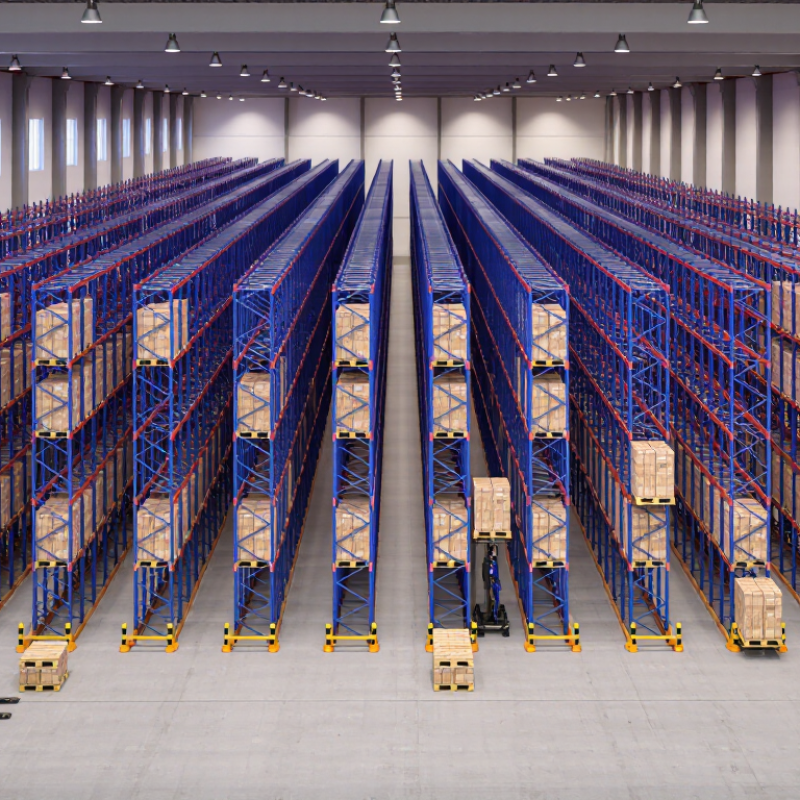
A drive-in storage system is built around deep rack lanes rather than separate aisles for every pallet. Steel frames stand in parallel rows, creating tunnel-like channels. Horizontal rails support pallets at several levels. Forklifts enter these channels directly to load or retrieve goods.

The layout is simple. Each lane usually holds one product type or batch. Pallets move inward along rails, while the forklift remains inside the rack structure. This arrangement reduces aisle space and increases storage density.

It works best with stable, uniform pallets that can withstand controlled handling. In daily warehouse operations, clear floor markings and visible load signs help drivers judge entry depth.

Drive-in racks commonly follow a last-in, first-out flow. The newest pallet enters first and often leaves first. This structure suits durable goods with flexible rotation dates. It is less suitable for products requiring strict first-in, first-out control.

That limitation is easy to overlook. Rack frames need regular checks for bent uprights, damaged rails, and uneven loading. A small impact can affect an entire lane.

Designers must also match rack dimensions with forklift reach, pallet size, ceiling height, and floor capacity. Air circulation and emergency access require attention, too.

A dense system may appear efficient, yet poor lane planning can slow retrieval and increase handling risks. Experienced operators review traffic patterns after installation, because the original layout may not reflect real working conditions.

How Goods Move Through a Drive-In Storage Rack

Drive-in storage racks let a forklift enter a deep lane instead of stopping at its opening. Pallets rest on horizontal support rails fixed to upright frames. A typical lane stores one product type, reducing travel and using warehouse floor space efficiently. The movement is simple, but it demands discipline. The operator checks pallet condition, lane clearance, and rail alignment before entry. Damaged pallets should not be placed inside.

Loading normally follows a last-in, first-out pattern. The forklift carries a pallet into the open lane, raises it slightly above the rails, and travels toward the backstop. It then lowers the pallet onto the rails, reverses carefully, and returns for the next load. Each pallet is placed from the deepest position outward. During unloading, the forklift removes the front pallet first, then advances as space opens. This sequence avoids reaching over stored goods and limits unnecessary handling. Slow movements matter.

In daily operation, trained personnel should match pallet dimensions, load weight, and rack capacity. Guide rails can help center the truck, yet they cannot correct poor steering. A small impact may bend a rail or loosen a frame connection. Inspections should record visible damage and remove unsafe lanes from service until qualified repair. The system is efficient, though not universally suitable. Mixed products, frequent access, or uncertain stock rotation can create delays. That limitation is easy to overlook.

Key Benefits and Limitations of Drive-In Storage

Drive-In Storage: Key Benefits and Limitations

Drive-in storage uses rack lanes that forklifts enter to place pallets on supported rails. Pallets usually follow a last-in, first-out pattern. The newest pallet enters first, while older stock waits deeper inside. This design reduces the need for multiple aisles and increases floor utilization. In practical warehouse planning, it works best for large quantities of similar products. It is especially useful when storage density matters more than immediate pallet access.

The main benefit is space efficiency. Fewer aisles can create more pallet positions within the same building. The system can also reduce construction pressure when expansion space is limited. However, access is restricted. Workers cannot reach every pallet independently. This can slow picking and complicate inventory rotation. Forklift movement inside narrow lanes also requires disciplined training and careful inspections. One damaged rail may affect an entire storage lane. It is not a perfect solution. Many facilities overestimate density and underestimate handling time.

Tips: Check product turnover before choosing this system. Keep similar pallets in each lane, and mark entry points clearly. Inspect rails, uprights, and floor conditions regularly. Leave enough clearance for the actual forklift, not just its published dimensions. Test one lane during busy periods. That small trial may reveal congestion, poor visibility, or unsafe reversing habits. Need advice? Consult a qualified storage engineer. Surface-level calculations can miss daily operating problems.

When to Choose Drive-In Storage for Warehouse Operations

Drive-in storage is a pallet-racking system with rails or supports inside deep lanes. Forklifts enter the structure to load and retrieve pallets. This design removes many access aisles and increases storage density. However, it usually follows a last-in, first-out flow. That limitation matters.

Choose drive-in storage when products are uniform, palletized, and stored in large batches. It suits cold rooms, seasonal inventory, and slow-moving goods with few stock-keeping units. It is less suitable for mixed orders or products requiring frequent individual access. The 2024 State of Logistics Report from the Council of Supply Chain Management Professionals placed U.S. logistics costs at about 2.3 trillion dollars in 2023. Better space use can reduce facility pressure, but density alone does not guarantee lower costs. Forklift travel, loading discipline, and product damage still require close control. In practice, a badly managed deep lane becomes a costly traffic problem. It is not perfect.

Tips: Review inventory records before installation. Group pallets by product and expiration date. Keep heavier loads at lower levels. Mark entry and exit rules clearly. Track retrieval time, pallet damage, and lane utilization for several weeks. The Warehouse Education and Research Council’s operational benchmarking approach also supports measuring labor, accuracy, and throughput together, rather than judging racking by capacity alone. A small pilot is wiser than a full conversion. That lesson is easy to ignore.

What Is Drive-In Storage and How Does It Work?

Typical pallet storage depth by warehouse racking system

Drive-in racking typically stores about 4–10 pallets deep in a single loading lane, allowing forklifts to enter the rack and use the same side for loading and unloading. This high-density design is most suitable for warehouses handling large quantities of the same SKU, with relatively low product variety and a last-in, first-out (LIFO) workflow. Selective racking provides easier access to individual pallets, while push-back and pallet-flow systems offer intermediate density and selectivity.

FAQS

What is drive-in storage?

Drive-in storage is a high-density pallet system. Forklifts enter rack lanes and place pallets on supported rails. It reduces the number of warehouse aisles.

How does drive-in storage differ from selective racking?

Selective racking gives every pallet direct aisle access. Drive-in storage limits access to shared lanes. The trade-off is clear: more density, less visibility.

How does pallet movement usually work?

Pallets usually follow a last-in, first-out pattern. The newest pallet enters first. Older stock remains deeper inside the lane.

Which products suit drive-in storage?

It suits large quantities of similar products. Packaged materials and seasonal inventory may work well. Products should tolerate longer storage cycles.

What are the main space benefits?

Fewer aisles create more pallet positions. Floor space becomes more productive. This can help buildings with limited expansion room.

What limitations should warehouse managers expect?

Workers cannot reach every pallet independently. Picking may become slower. Inventory rotation can also become difficult. Density alone does not solve operational problems.

What safety and maintenance checks are important?

Inspect rails, uprights, and floors regularly. Check forklift alignment inside every lane. One damaged rail can affect an entire storage lane. That risk is easy to underestimate.

What should be checked before installation?

Compare pallet turnover, product compatibility, fire protection, and equipment clearance. Measure the actual forklift, including its turning space. Published dimensions may not reflect daily movement.

Should a warehouse test the system before full installation?

Yes, testing one lane during busy periods can reveal problems. Watch for congestion, poor visibility, and unsafe reversing habits. A small trial may challenge an attractive capacity estimate.

Conclusion

Drive-in Storage is a high-density warehouse racking system designed to store large quantities of the same product or pallet type. Unlike selective racks, it reduces the need for multiple aisles by allowing forklifts to enter the rack structure and place pallets on internal support rails. The system usually has a sturdy framework with several storage lanes, each organized by depth and height. Goods are typically loaded and retrieved from the same accessible side, following a last-in, first-out pattern.

In operation, forklifts drive into a lane, position pallets on the rails, and remove them when needed. This design makes excellent use of available floor and vertical space, lowers aisle requirements, and can improve storage density. However, it offers less product selectivity, requires careful forklift operation, and may not suit goods with frequent rotation or many different stock-keeping units. Drive-in Storage is most suitable for warehouses handling stable inventories, uniform pallets, and large batches of similar products where space efficiency is more important than immediate access to every pallet.

Charlotte

Charlotte

Charlotte is a seasoned marketing professional with a deep understanding of the company's portfolio and a passion for elevating its presence in the market. With a keen eye for detail and a commitment to excellence, she ensures that our professional blog is regularly updated with insightful articles......