Choosing the right Push-Back Storage system is a practical decision, not merely a search for maximum pallet density. A warehouse may look spacious, yet poor lane depth can create hidden congestion, difficult stock rotation, and unnecessary forklift travel. The best solution connects product characteristics, throughput, safety, and future growth.
The 2024 MHI Annual Industry Report found that 55% of supply chain leaders planned to increase technology investment. That figure signals pressure to improve warehouse performance, but automation alone cannot fix unsuitable storage geometry. The 2023 LogisticsIQ warehouse automation report also identified rising investment in flexible, scalable systems. Push-Back Storage can support this need by using inclined rails, nested pallets, and fewer aisles than selective racking. However, it may not suit every SKU profile.
Warehouse design authority Edward Frazelle states that “the objective of warehousing is to satisfy customer demand at the lowest possible total cost.” This principle should guide every rack comparison. Density is valuable. Accessibility still matters. A narrow lane filled with slow-moving pallets may be efficient; the same lane can become frustrating when demand changes weekly.
This guide examines load capacity, pallet depth, FIFO and LIFO requirements, rack height, forklift compatibility, fire protection, and installation quality. It also considers maintenance details, such as roller inspection and pallet condition. These points are easy to overlook.
No storage system is perfect. A careful choice begins with honest data: pallet dimensions, daily movements, turnover rates, and available clear height. That is where this Push-Back Storage evaluation starts.
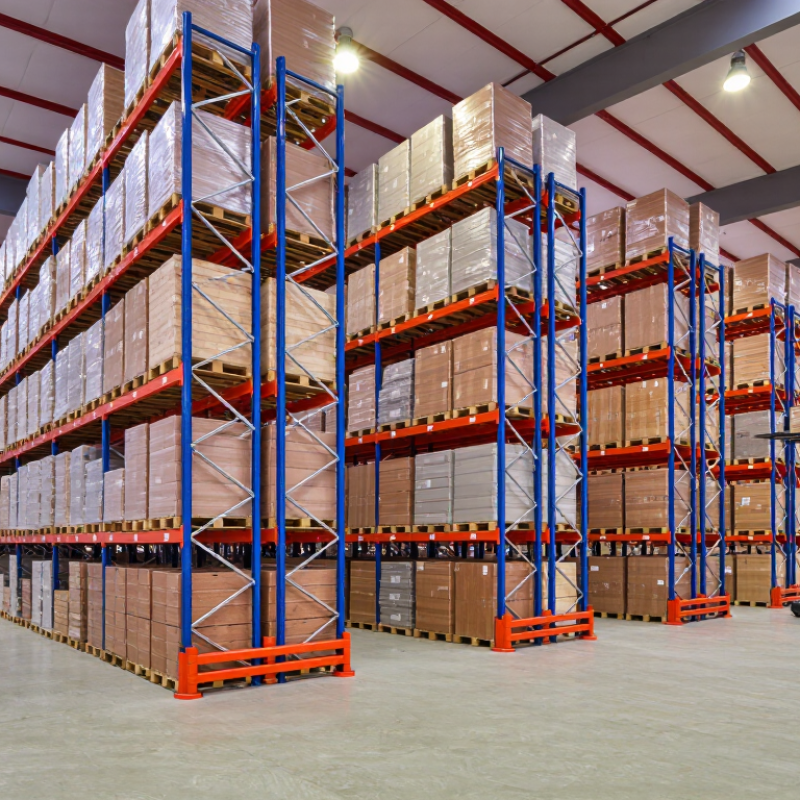
Push-back storage is a high-density pallet system designed for warehouses holding several pallets of the same product. It uses wheeled carts or nested rails inside each lane. Forklifts load and retrieve pallets from one accessible aisle. The pallet does not travel straight through. Instead, each new load pushes the previous one deeper into the lane. This simple movement defines the system.
During loading, an operator places a pallet on a cart and gently drives it forward. The cart rolls along inclined rails, creating controlled movement through gravity. The next pallet repeats the action. During unloading, the front pallet is removed first. Rear pallets then roll forward automatically. No worker enters the storage lane. This separation can reduce collision exposure and make handling more predictable. Still, automatic does not mean risk-free. Uneven pallets, damaged wheels, or poor speed control can interrupt operations.
In practice, push-back storage works best for products managed by last-in, first-out access. It suits medium-turnover goods with limited product variation. A warehouse manager should check pallet dimensions, load weight, lane depth, and forklift clearance before choosing a layout. Small differences matter. An overhanging pallet may scrape the frame or block movement. Warehouse observations often show that operators focus on capacity and overlook training. That deserves another look. Clear loading rules, routine rail inspections, and visible load limits support reliable performance, although no design removes the need for human judgment.
Choosing a push-back storage system starts with accurate warehouse measurements. Record clear ceiling height, column positions, aisle widths, and floor conditions. Do not measure only empty areas. Forklift turning space can reduce usable capacity quickly. Check pallet dimensions, weights, and load stability before selecting lane depth. A system designed for standard pallets may perform poorly with mixed loads.
Inventory behavior matters just as much. Push-back storage suits multiple pallets of the same product and supports last-in, first-out handling. It may not fit goods requiring strict first-in, first-out rotation. Review stock volume, replenishment frequency, product sensitivity, and seasonal changes. Fast-moving inventory needs accessible lanes. Slow-moving goods can use deeper storage positions. The perfect layout rarely exists. Recheck assumptions after several weeks of real operation.
Tips: Map daily forklift routes with floor markings before installation. Test the deepest lane using the actual pallets and handling equipment. Keep heavier loads in lower positions when possible. Confirm rack capacity with qualified storage professionals. Inspect rails, frames, and pallet conditions regularly. Train operators on controlled loading and retrieval. Leave enough clearance for damaged pallets, because real warehouses are rarely as tidy as planning drawings.
Cart configuration should match product flow, not simply aisle width. Two-deep carts suit predictable, high-volume pallets. Three- or four-deep configurations improve storage density but reduce direct access. Push-back storage normally follows LIFO rotation, so mixed-date inventory may create avoidable handling risks. The 2024 MHI Annual Industry Report surveyed more than 1,300 supply-chain professionals. It identifies labor availability and inventory control as continuing operational pressures. That makes simple, visible loading sequences increasingly valuable.
Load capacity requires more than adding pallet weights. Check the heaviest unit, pallet condition, load center, cart rating, and beam capacity together. ANSI MH16.1-2023 provides recognized guidance for industrial steel rack design and rated capacities. Leave a practical safety margin. Do not design around the average pallet. One unusually dense load can expose a weak assumption. Floor flatness and forklift impact protection also deserve attention. Small omissions become expensive.
Storage depth should reflect demand patterns and retrieval frequency. A deep lane may hold more pallets, but operators travel farther inside the rack. Measure the real number of pallet positions gained, then compare it with replenishment time. In warehouse assessments, I often find that theoretical density exceeds usable density. That difference matters. Test one representative lane with actual pallets, carts, and equipment before expanding the system. Depth is useful only when the operator can control it safely and consistently.
Choosing a push-back storage system requires more than comparing pallet capacity. Safety, accessibility, and durability determine how reliably the system performs during busy shifts.
In daily warehouse evaluations, I treat safety as a practical process, not a checklist. Look for secure wheel guides, positive stops, protected frames, and clearly displayed load ratings. A trained installer should verify anchoring and alignment before use. Small details matter. Inspect rails for debris and damage. Test it empty. Then test it with a controlled load. Operators also need visible instructions and enough clearance to handle pallets without twisting or reaching dangerously.
Accessibility affects both speed and error rates. Each pallet position should remain easy to identify, even under dim lighting. Smooth-running carts reduce pushing effort, while reachable controls help different operators work comfortably. I once overlooked the height of a rear safety barrier during a site review. That assumption was wrong. It blocked clear visibility from one angle. Walk through the system as an operator would, carrying a scanner or handling a pallet jack.
Durability depends on materials, workload, and maintenance discipline. Check weld quality, wheel construction, corrosion protection, and replaceable components. Ask for inspection intervals and documented load testing. A strong frame can still fail through neglected wheels or bent rails. Record damage with photographs and repair it promptly. Cheap repairs may become expensive downtime.
| Evaluation Dimension | Practical Data or Benchmark | Why It Matters | Recommended Verification | Priority |
|---|---|---|---|---|
| Storage Depth | Common configurations store 2, 3, or 4 pallets deep per lane. | Greater depth increases storage density but reduces direct access to individual pallets. | Match lane depth to pallet quantities per SKU and expected inventory turnover. | High |
| Pallet Selectivity | For a single lane, front-position access is approximately 50% in a 2-deep lane, 33% in a 3-deep lane, and 25% in a 4-deep lane. | Selectivity decreases as the number of pallets stored behind the front position increases. | Use deeper lanes for reserve or batch storage rather than high-frequency individual picking. | High |
| Inventory Rotation | Push-back storage normally operates on a last-in, first-out (LIFO) basis. | LIFO is suitable for many non-perishable products but may not suit date-sensitive inventory. | Choose a FIFO-compatible system when lot date, expiry, or strict sequence control is required. | Critical |
| Pallet Compatibility | Pallet dimensions, entry type, bottom-board layout, weight, and condition must be compatible with the rails or carts. | Incompatible or damaged pallets can create instability, uneven loading, or poor cart movement. | Test every pallet type under maximum intended load before commissioning. | Critical |
| Load Rating | The rated capacity must cover the heaviest pallet, including load concentration and the number of pallet positions in the lane. | Capacity is application-specific and must not be inferred from appearance or shelf dimensions. | Request stamped load tables and structural calculations for each beam, rail, cart, and frame. | Critical |
| Pallet Retention | The system should include positive end stops, rear stops, guide rails, or equivalent retention features appropriate to the design. | Retention features help prevent pallets from rolling, sliding, or being pushed beyond the safe loading position. | Inspect stop height, attachment strength, clearance, and visibility from the forklift position. | Critical |
| Forklift Access | Aisle width, lift height, turning radius, mast clearance, and load center must be compatible with the selected forklift. | Poor equipment compatibility increases rack impact, pallet damage, and operator risk. | Validate the layout using the actual forklift model and the largest planned load. | Critical |
| Pallet Movement | Carts or rollers should move smoothly without binding, sudden stops, excessive vibration, or uncontrolled acceleration. | Controlled movement reduces impact forces and helps protect operators, pallets, and stored goods. | Run loaded and unloaded movement tests at the lowest and highest intended pallet weights. | High |
| Rack Protection | Frame guards, upright protectors, end-of-aisle protection, and clearly marked impact zones should be provided where vehicle contact is possible. | Protection reduces damage caused by forklift contact in high-traffic areas. | Review protection coverage against traffic patterns and conduct documented impact inspections. | High |
| Structural Standards | Design and inspection should follow applicable local regulations and recognized racking guidance, such as EN 15635 or ANSI/RMI MH16.1 where applicable. | Recognized standards provide a framework for design, use, inspection, and maintenance. | Confirm the governing standard with a qualified structural engineer and the local authority. | Critical |
| Material Protection | Powder-coated or galvanized components may be selected according to indoor humidity, wash-down requirements, temperature, and chemical exposure. | The correct finish helps limit corrosion and preserves structural performance. | Specify the environment and inspect coating thickness, damaged areas, and corrosion-prone joints. | High |
| Maintenance Accessibility | Wear parts such as wheels, rollers, bearings, stops, and guides should be reachable without dismantling major structural sections. | Easy access shortens downtime and encourages timely replacement of worn components. | Check service clearances, spare-part availability, replacement procedures, and inspection records. | High |
| Inspection Frequency | Visual checks should be performed routinely, with formal inspections scheduled according to applicable regulations, site risk, and equipment use. | Regular inspection identifies deformation, loose components, corrosion, and abnormal movement before failure. | Create a documented inspection checklist with defect categories and corrective-action deadlines. | Critical |
| Operational Training | Operators should be trained to center loads, avoid pushing misaligned pallets, observe load limits, and report rack damage immediately. | Correct operating behavior is essential because even a properly designed system can be damaged by misuse. | Use written procedures, practical demonstrations, refresher training, and signed training records. | Critical |
How to Choose the Best Push-Back Storage System?
Cost and performance should be measured together, not separately. Push-back racks usually store two to five pallets deep, reducing aisle space and increasing pallet positions. However, the extra density can increase handling time and product access limits. The 2024 MHI Annual Industry Report identifies robotics and automation as major investment priorities, with 83% of respondents expecting adoption within five years. That trend makes compatibility with forklifts, sensors, and warehouse software financially important.
A practical analysis starts with four figures: installed cost, pallet positions, handling time, and expected maintenance. Divide the total investment by usable pallet locations. Then compare the result with selective racking, considering floor rent and labor costs. WERC’s 2024 DC Measures report uses inventory accuracy and order-picking performance as core distribution benchmarks; many operations target accuracy above 99%. A push-back layout may support that target when products move in stable batches.
Not every case fits.
A field assessment should test pallet condition, load weight, and SKU turnover. I have seen storage plans look efficient on paper, yet become slow when mixed pallets enter the same lane. That assumption needs challenging. A system with lower initial cost may create hidden expenses through damaged pallets, replenishment delays, or difficult inspections. Leave enough clearance for safe access, and calculate performance from real movement records, not idealized capacity. (Sources: MHI, 2024 Annual Industry Report; WERC, 2024 DC Measures Report.)
Select the best system through cost and performance analysis
The comparison uses common warehouse planning metrics for push-back storage. Deeper lanes generally reduce the initial cost per pallet position and improve space utilization, but they can reduce direct access and handling speed. The best choice depends on inventory turnover, SKU variety, available floor space, and the required number of pallet positions.
Measure ceiling height, columns, aisle widths, floor flatness, and forklift turning areas. Empty floor space can mislead you.
Check pallet size, weight, load center, condition, and stability. Mixed loads may perform poorly in standard lanes.
Push-back storage generally supports last-in, first-out handling. It may not suit products requiring strict first-in, first-out rotation.
Use shallower carts for fast-moving goods and deeper lanes for slower products. More depth means less direct access.
No. Two-deep carts suit predictable, high-volume pallets. Three- or four-deep carts increase density but require longer retrieval travel.
Consider the heaviest pallet, pallet condition, load center, cart rating, beam capacity, and floor conditions together. Do not plan around average weight.
Mark daily forklift routes on the floor. Test one deepest lane using actual pallets, carts, and handling equipment.
Keep heavier loads low, protect frames from forklift impacts, and leave clearance for damaged pallets. Real warehouses are rarely perfectly tidy.
Recheck retrieval time, lane accessibility, replenishment frequency, and operator control after several weeks. The original layout may not be ideal.
Inspect rails, frames, pallets, and clearances regularly. Train operators in controlled loading and retrieval. Small omissions become expensive.
Choosing the best Push-Back Storage system begins with understanding how it works. Unlike traditional pallet racks, this system uses inclined rails and nested carts to move pallets toward the front as loads are added or removed. Before selecting a configuration, evaluate your warehouse layout, available ceiling height, inventory turnover, pallet dimensions, and handling equipment. These factors determine whether a shallow or deep-lane design will provide the right balance between capacity and accessibility.
Next, compare cart configurations, load ratings, storage depth, and compatibility with your pallets and forklifts. Safety features such as backstops, retaining systems, stable rails, and clear operating procedures are essential for reliable performance. Durability should also be assessed through materials, maintenance needs, and expected usage frequency. Finally, compare total costs—including installation, operation, maintenance, and space savings—with the system’s capacity and productivity benefits. The best choice is one that improves storage density while supporting safe, efficient, and practical warehouse operations.

Chaoyu Storage