Choosing the right Steel Platforms for a global project involves more than selecting beams, grating, and handrails. It requires a clear understanding of people, processes, climate, codes, and long-term maintenance. A platform beside a coastal process unit faces salt spray, while one inside a desert plant may endure dust, heat, and extreme temperature changes. The same design cannot serve both locations without careful review.
Fazlur Rahman Khan, a pioneering structural engineer, once said, “The technical man must not be lost in his own technology. He must be able to appreciate life, and life is art, drama, music, and most importantly, people.” His words remain relevant when evaluating Steel Platforms. Engineers must consider how workers climb stairs, carry tools, escape during emergencies, and inspect equipment after years of service. Technical compliance alone is not enough.
This guide examines platform materials, load capacity, corrosion protection, modular construction, transport limits, and installation conditions. It also compares practical considerations across international standards, including project-specific structural and safety requirements. Experienced teams know that drawings may look complete while small details remain unresolved. Drainage, bolt access, weld inspection, and replacement planning are often overlooked. That is where projects become expensive.
There is no universal platform solution. Sometimes, a lighter modular system improves shipping efficiency. In other cases, heavier steel provides essential stiffness and durability. The best decision connects engineering evidence with site experience, supplier capability, and honest risk assessment. Some assumptions may prove wrong. They should be challenged early.
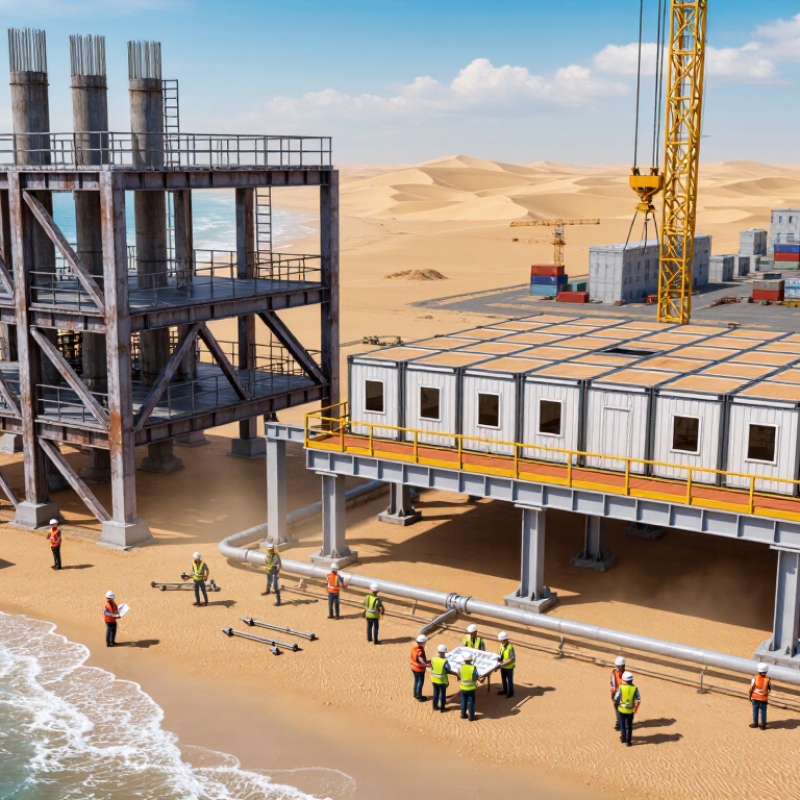
Defining Project Requirements for Steel Platform Selection
Steel platform selection begins with the work, not the catalogue. Define equipment loads, maintenance tasks, access routes, and emergency movement. A 1.2-metre pallet may need a wider turning zone than expected. Forklift wheel loads can also exceed ordinary uniform live-load assumptions. Every requirement should have a measurable value, owner, and verification method.
Environmental conditions require equal attention. Record wind speed, seismic category, temperature range, humidity, and chemical exposure before selecting steel grades or coatings. ISO 14122-3:2016 addresses permanent access platforms, guardrails, and stairs. EN 1993-1-1 supports structural steel design across many international projects. However, one standard rarely answers every site question. Local codes and client specifications still need review.
Safety data makes this process less theoretical. The International Labour Organization reported nearly three million work-related deaths annually and about 395 million non-fatal work injuries in 2023. Platform geometry therefore affects more than structural strength. Specify handrail height, toe-board requirements, anti-slip surfaces, drainage, and inspection access. The World Steel Association’s 2024 Short Range Outlook estimated global finished steel demand at about 1.75 billion tonnes, showing the scale of steel use but not its suitability for every project. My early designs often focused too heavily on capacity. That was incomplete. Maintenance access, corrosion allowance, transport limits, and future equipment changes deserve equal weight.
Material strength is a key requirement when selecting steel platforms for global projects. The chart compares the nominal minimum yield strength of common structural steel grades for plate thicknesses up to 16 mm. Higher-strength steel can help reduce structural weight, but the final selection must also consider corrosion exposure, fatigue, welding requirements, temperature, local standards, fabrication capacity, and total lifecycle cost.
Data shown: nominal minimum yield strength in megapascals (MPa) for grades S275, S355, and S460.
Steel grade selection directly affects platform strength, weight, welding, and long-term maintenance. Under EN 10025-2, S275 steel provides a minimum yield strength of 275 MPa, while S355 provides 355 MPa for thinner sections. ASTM A572 Grade 50 specifies a minimum yield strength of 345 MPa. Higher strength may reduce member sizes, but it can increase welding controls and inspection requirements. More strength is not always better.
Design loads need local interpretation. EN 1991-1-1 separates imposed loads by building use, while wind and snow values vary by location. A maintenance platform may carry people, tools, stored materials, and occasional impact loads. Engineers should check bending, shear, deflection, vibration, connection strength, and column buckling. A 2024 World Steel Association report recorded approximately 1.88 billion tonnes of global crude steel production in 2023, yet availability does not guarantee consistent quality between supply regions. Mill certificates, traceability, and independent testing remain essential.
Practical details matter. A grated deck drains rainwater better than a solid plate, but small tools can fall through it. Guardrails, toe boards, stair angles, and access clearances should match the governing local code. For exposed sites, corrosion allowance and protective systems require climate-specific review. Engineers sometimes rely too heavily on nominal capacity tables. That assumption deserves challenge. Real performance depends on fabrication tolerances, site connections, and changing loads. A conservative design may cost more initially, but an under-checked platform can create greater project risk.
Steel platforms for global projects must be selected against real environmental exposure, not only load capacity. Salt spray, humidity, dust, ultraviolet radiation, and freeze-thaw cycles can quickly weaken poorly protected steel. ISO 9223 classifies atmospheric corrosivity from C1 to CX. This classification helps engineers specify coatings, drainage, fasteners, and inspection intervals. However, laboratory ratings may not reflect every site detail. That assumption fails.
The IPCC Sixth Assessment Report states that heavy precipitation has increased across many land regions and will intensify with further warming. Platform layouts should therefore prevent standing water around grating, welds, and base plates. Wind and seismic requirements also vary by location, so local design codes must be checked before fabrication. Coastal platforms need special attention. Small gaps can trap salt and moisture, creating hidden corrosion. A practical inspection mock-up can reveal these weaknesses early.
Compliance should be documented through material certificates, welding records, coating test results, and traceable calculations. Relevant requirements may include ISO 12944 for protective paint systems, EN 1090 for structural fabrication, and locally adopted wind or seismic standards. The International Energy Agency reports that iron and steel production creates about 7% of global energy-related emissions. The World Steel Association recorded approximately 1.88 billion tonnes of crude steel production in 2023. These figures support specifying durable, repairable structures instead of replacing failed components. Yet sustainability claims need evidence, not attractive wording. Supplier declarations, inspection records, and verified lifecycle data deserve careful review.
Choosing steel platforms for global projects requires more than comparing load ratings. Fabrication, transport, installation, and maintenance can change the best design.
Start with fabrication capability. Confirm available plate sizes, welding procedures, dimensional tolerances, and inspection records. A platform designed for one workshop may require costly revisions elsewhere. Specify clear connection details and allow practical access for welding and coating. Independent inspection can verify material certificates, weld quality, and protective systems.
Transport planning begins during design. Check module weight, lifting points, road limits, port handling, and temporary bracing. Large sections may need to be divided, but extra joints increase assembly time and inspection work. Keep the route in view. A perfect module is useless if it cannot pass beneath bridges or fit inside a vessel.
Installation conditions deserve equal attention. Wind, limited cranes, uneven foundations, and restricted work areas can affect sequence and safety. Provide marked lifting points, bolt access, alignment tolerances, and realistic installation drawings. Field teams should review the method before fabrication starts.
Maintenance is often underplanned. Include walkways, drainage, replaceable grating, inspection openings, and safe access to bolted connections. Select coatings for the actual climate, including salt spray, humidity, or industrial dust. Allow corrosion margins where justified by engineering assessment.
A tidy plan can still fail. I have seen access assumptions collapse after equipment was installed. Recheck clearances with three-dimensional models and site measurements. Small uncertainties deserve written decisions, not optimistic guesses. Reliable platforms are built around evidence, but they must remain practical for people working on them.
How to Choose the Right Steel Platforms for Global Projects
Balancing Quality, Safety, Lead Time, and Total Project Cost
A steel platform is not only a fabrication item. It controls access, maintenance speed, and worker exposure. The International Labour Organization estimated 2.93 million work-related deaths annually in 2023. That figure makes safety a project-cost issue, not a compliance checkbox. Specify verified material grades, traceable weld procedures, non-slip grating, guarded edges, and engineered load paths. Small omissions become expensive during installation.
Lead time needs equal discipline. A platform requiring unusual profiles or late design changes can delay equipment commissioning. The World Steel Association reported about 1.89 billion tonnes of crude steel production in 2023. Supply exists, but suitable certified steel may not be available locally. Check mill capacity, coating facilities, port access, customs documents, and replacement-part logistics before approving drawings. “Available steel” is not always usable steel.
Total cost should include lifting, transport, site labor, inspection, corrosion protection, and future maintenance. A cheaper frame may need more field welding or repainting. That can erase the initial saving. In practical reviews, I would compare delivered cost per installed square metre, not fabrication price alone. A clean calculation can still miss weather delays and temporary access. Allow a realistic contingency, then challenge it. The right platform is safe, buildable, and repairable across its operating life.
Steel grade influences strength, member size, welding, weight, and maintenance. Higher strength is not always better. It may require stricter welding controls.
Engineers should consider people, tools, stored materials, wind, snow, vibration, and occasional impact. Check bending, shear, deflection, connections, and column buckling.
No. Nominal tables can hide fabrication tolerances, weak connections, and changing site loads. Real performance needs engineering review and evidence.
Grating drains rainwater effectively and improves airflow. Small tools can fall through it. Solid flooring prevents falls but may retain water.
Confirm plate sizes, welding procedures, tolerances, inspection records, and coating access. A design suitable for one workshop may fail elsewhere.
Check module weight, lifting points, road limits, port handling, temporary bracing, and route clearances. Large modules may need extra joints.
Plan for wind, cranes, foundations, work areas, bolt access, lifting points, and alignment tolerances. Drawings should match real site conditions.
Provide drainage, walkways, replaceable grating, inspection openings, and safe access to connections. Choose coatings for humidity, salt spray, or dust.
Compare delivered cost per installed square metre. Include transport, lifting, labor, inspection, coatings, delays, and future repairs. Cheap fabrication can become expensive later.
Do not assume steel availability means certified steel is ready locally. Verify traceability, testing, coating capacity, logistics, and replacement options. Some assumptions fail.
Choosing the right Steel Platforms for a global project begins with a clear understanding of operational requirements, including intended use, dimensions, load capacity, access needs, and expected service life. Project teams should compare suitable steel grades, structural designs, corrosion protection options, and safety features to ensure the platform performs reliably under both static and dynamic loads. Environmental conditions such as humidity, temperature changes, wind, seismic activity, and exposure to chemicals must also be considered, along with the compliance standards applicable in each project location.
A complete evaluation should cover fabrication quality, inspection procedures, transportation constraints, installation methods, and future maintenance requirements. Modular designs may simplify delivery and assembly, while durable finishes and accessible components can reduce long-term maintenance effort. The final decision should balance structural safety, material quality, production lead time, logistics, installation efficiency, and total project cost. By assessing these factors together, organizations can select Steel Platforms that provide dependable performance, regulatory alignment, and lasting value across different global applications.
Chaoyu Storage