Choosing Narrow Aisle Storage is not simply a matter of fitting more racks into less space. The right system must suit your building, inventory, handling equipment, and daily workflow. A few extra pallet positions may look valuable on a layout. But they can create bottlenecks if lift trucks cannot turn or replenish stock efficiently.
Start with accurate measurements. Record aisle widths, ceiling height, column locations, floor condition, pallet dimensions, and load weights. Then compare those details with the reach truck or turret truck you plan to use. Check the equipment maker’s operating clearances and the rack supplier’s load specifications. Small gaps matter. So do sprinkler coverage, pedestrian routes, and access for maintenance. Requirements vary by site, so qualified warehouse and rack professionals should review the final design.
This guide explains how to assess storage density, truck compatibility, rack configuration, and operating costs before making a decision. It also highlights common trade-offs, including slower access to some loads and the training needed for specialized equipment. A drawing can make a layout seem simple. Real operations are less tidy. Product mix changes, damaged pallets appear, and peak-season traffic can expose weak assumptions. Build in room to adapt, and validate the plan with your actual inventory and workflow. That practical check may reveal that the densest option is not the best one.
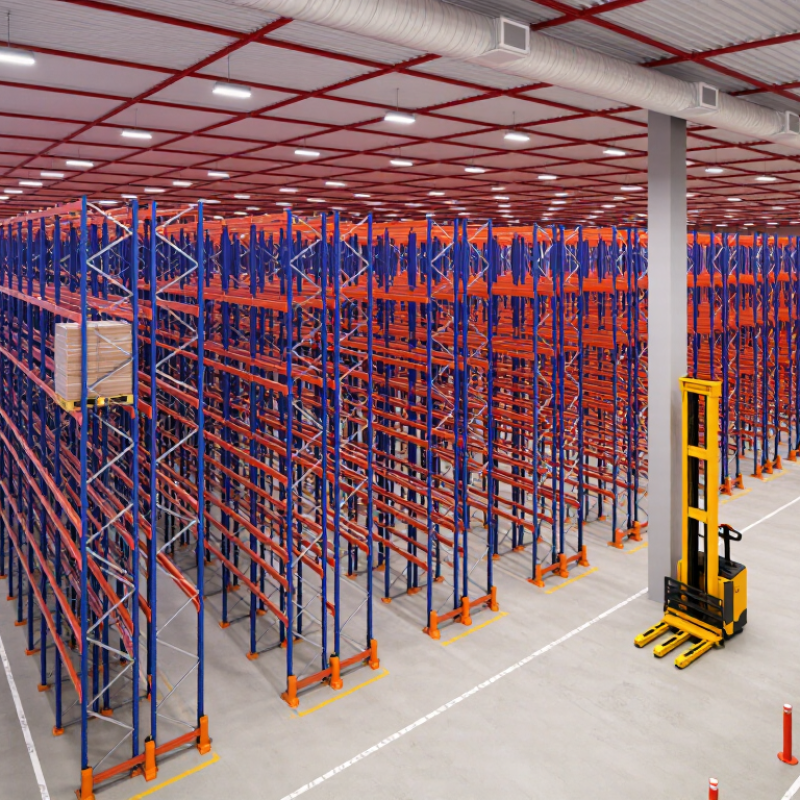
Narrow aisle storage uses closely spaced pallet racks to reduce travel lanes and fit more inventory within a warehouse. “Narrow” is not one fixed measurement: required aisle width depends on the truck, pallet size, load height, and turning clearance. Conventional narrow-aisle layouts often use guided reach trucks, while very-narrow-aisle (VNA) systems use turret or articulated trucks that can pick from either side without turning. Check the equipment specifications against the actual load. A drawing alone can be misleading.
The main rack types serve different storage needs. Narrow-aisle selective racking gives direct access to each pallet, making it practical for mixed stock and frequent picking. VNA selective racking packs aisles more tightly but may need floor guidance and specialized trucks. Drive-in racking lets a forklift enter the rack lanes, storing pallets in depth; it suits fewer product lines with multiple pallets per line, though access is less direct. A cautious signal from the industry: MHI and Deloitte’s 2024 Annual Industry Report projected robotics and automation adoption rising from 23% to 61% within five years. That trend makes equipment compatibility worth checking early. It is easy to overvalue pallet density. Leave room for safe maneuvering, load variation, and the occasional imperfect placement.
A narrow-aisle plan should start with the warehouse you have, not a catalog diagram. Measure clear aisle width, rack depth, column spacing, door openings, and floor condition. Then map pallet dimensions and the space needed for loads to turn safely. A tape measure can reveal awkward pinch points. Measure twice. Include sprinkler clearance, pedestrian routes, and staging areas; reclaimed floor space is not useful if daily movement becomes obstructed.
Inventory patterns matter as much as building dimensions. List pallet counts, SKU turnover, replenishment frequency, and seasonal peaks. Fast-moving items may need convenient access, while slower stock can occupy higher or less accessible positions. Check whether partial pallets and mixed loads are common. They can change the best storage configuration. MHI’s 2024 Annual Industry Report found that 55% of respondents planned to increase supply-chain technology investment. That supports reviewing equipment and systems together, rather than treating racks as a separate decision.
Match the layout to the actual equipment: measure truck turning radius, mast height, load capacity, and operator visibility. Confirm floor flatness and rack clearances with qualified warehouse and equipment professionals before changing aisle widths. MHI also reported that 88% of respondents expected digital supply chains to become dominant within five years. That is a useful signal, not a guarantee of savings. A careful site trial can expose problems a drawing misses; it may slow the project, but that is often cheaper than rebuilding.
Narrow-aisle storage can add pallet positions, but density is only useful when workers can reach the right load safely. Compare layouts using usable pallet positions per square foot, then check how many SKUs need direct access. Selective racks suit frequent picking; double-deep or drive-in systems increase density but can slow retrieval and complicate stock rotation. A tidy spreadsheet can still mislead. Map the actual pallet dimensions, including overhang, and test turning clearance with the intended lift equipment.
Measure access in real work: retrieval time, replenishment moves, and congestion at aisle ends. OSHA’s Powered Industrial Trucks eTool cites an estimate of about 85 forklift-related deaths and 34,900 serious injuries annually in U.S. industry; the estimate is dated, but it underscores why clearance and sightlines matter. The U.S. Bureau of Labor Statistics’ 2023 injury survey reports a 4.8 total-recordable-case rate per 100 full-time workers in warehousing and storage. Keep pedestrian routes distinct, protect rack ends, and verify load ratings. I would not approve a layout from drawings alone; a pallet corner or floor irregularity can consume the clearance you planned. Test a representative aisle under normal operating conditions before committing.
Choosing narrow-aisle storage starts with daily work, not a rack drawing. Record pallet dimensions, load weights, SKU counts, and replenishment peaks. Measure clear height, columns, floor condition, sprinkler clearance, and turning space using the lift truck you plan to operate. Small details matter. An aisle that looks workable on paper may feel restrictive near a dock door or picking zone. Map travel paths and fast-moving items, too. Higher storage density can add travel time if frequently picked goods end up far from dispatch.
Match the system to throughput, selectivity, and operator capability. Some narrow-aisle layouts rely on specialized trucks or guidance, so confirm the required aisle width with real pallet overhang and turning movements. MHI’s 2024 Annual Industry Report found that 88% of respondents expected to increase supply-chain technology investment over the following five years. That figure is not a storage specification, but it supports planning for compatible scanning and inventory systems. Pilot the layout where possible, then compare actual pick rates and replenishment delays with forecasts. Forecasts can be neat; peak shifts rarely are. Have a qualified professional assess rack loads, floor capacity, and clearances before installation.
Before installation, measure aisle widths, rack heights, floor joints, and turning areas with the equipment that will use them in mind. A drawing can look precise while missing a sprinkler pipe or a low doorway. Small details matter. Have a qualified installer verify floor condition, rack anchoring, clearances, and load information before work begins. Schedule installation in sections where possible, so receiving and picking can continue without sending people through an active work zone.
Training should match the actual layout, not just the equipment manual. Show operators how to approach rack openings, position loads, and respond when a pallet sits unevenly. Practice in a clear area before normal picking starts. Keep pedestrian routes visible, and explain who may enter restricted aisles. A short refresher after a layout change can prevent habits from drifting. Training takes time, and rushed sessions are easy to forget.
Set a maintenance routine before the first shift. Check rack connections, guards, aisle guidance components, and floor damage on a recorded schedule. Look for fresh impact marks; they can reveal repeated clearance problems. Report faults promptly and remove damaged equipment from use until assessed. Battery condition and safety devices also need regular attention, following the equipment maker’s instructions. One point worth reconsidering: inspections alone cannot fix a layout that routinely encourages contact. If damage keeps returning, review aisle width, load dimensions, and operating practices together.
Measure clear aisle width, rack depth, column spacing, door openings, and floor condition. Include turning space, sprinkler clearance, pedestrian routes, and staging areas. Measure twice.
Track pallet counts, item turnover, replenishment frequency, and seasonal peaks. Keep fast-moving goods easier to reach. Mixed or partial pallets can change the plan.
Compare usable pallet positions per square foot, then check direct-access needs. Dense storage may slow retrieval or stock rotation. More positions are not always better.
Check truck turning radius, mast height, load capacity, and operator visibility. Have qualified professionals verify clearances and floor flatness. Drawings miss details.
Test a representative aisle with normal loads and the intended equipment. Watch turning, retrieval time, and congestion at aisle ends. A pallet corner can steal clearance.
Separate pedestrian routes, protect rack ends, and verify load ratings. Keep sightlines clear. Small floor irregularities matter.
Install in sections when possible, keeping receiving and picking routes usable. Mark active work zones clearly. Rushing helps nobody.
Practice approaching rack openings, positioning loads, and handling uneven pallets. Train in a clear area before routine picking begins. Refresh training after layout changes.
Record checks of rack connections, guards, aisle guidance components, and floor damage. Report impact marks and recurring faults. Inspections alone may not fix a poor layout.
Narrow Aisle Storage can help warehouses make better use of floor space while keeping inventory accessible. Choosing the right approach starts with understanding the main storage system types and evaluating the warehouse’s layout, ceiling height, inventory dimensions, picking patterns, and material-handling equipment. These factors influence which options are practical and how efficiently goods can be stored and retrieved.
Compare each option’s storage capacity, accessibility, and safety requirements before making a decision. The best system is one that supports daily workflows without creating unnecessary handling challenges or compromising safe movement through the aisles. After selecting a suitable solution, plan the installation carefully, prepare staff with appropriate training, and establish a regular maintenance schedule. These steps help the storage system perform reliably as inventory needs and warehouse operations change.

Chaoyu Storage